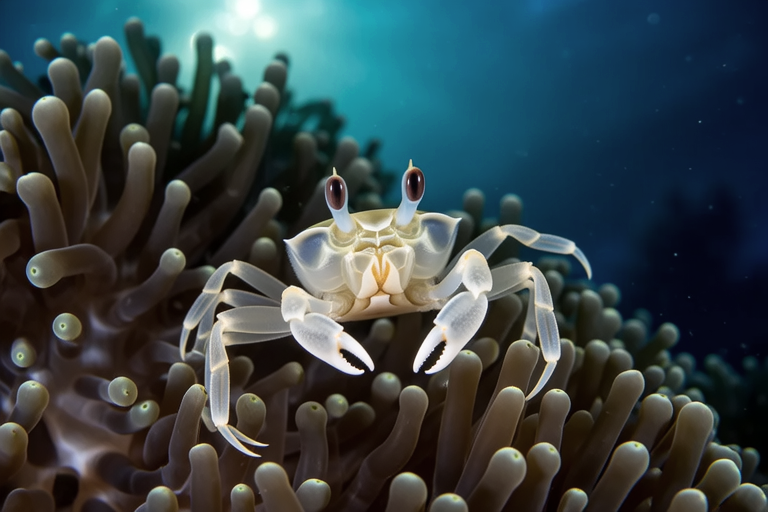
The Intriguing Life Cycle of the Miniature Pea Crab
The world of marine biology is full of fascinating creatures, each with their own unique stories and adaptations. Among these, the miniature pea crab (Pinnotheres pisum) stands out as a particularly intriguing subject. This tiny crustacean, known for its symbiotic relationships and complex life cycle, has captured the interest of scientists and nature enthusiasts alike. In this article, we will explore the life cycle of the miniature pea crab, from its early development stages to its mature adulthood, highlighting its unique characteristics, habitats, and behaviors.
Habitat and Unique Characteristics
Miniature pea crabs are found in coastal waters around the world, typically inhabiting the shells of bivalve mollusks such as clams and mussels. These crabs are remarkably small, measuring only about 3 to 8 millimeters in length, making them one of the smallest crabs in the world. Their compact size allows them to fit comfortably within the confines of their host’s shell, where they can find protection from predators and access to food.
Their body structure is adapted to their unique lifestyle. They have a flattened carapace, which helps them move easily within the narrow spaces of their hosts’ shells. Additionally, their legs are equipped with specialized hooks that allow them to anchor themselves securely inside the shell. This adaptation ensures that they do not get dislodged when their host moves through the water.
Symbiotic Relationships
One of the most remarkable aspects of the miniature pea crab’s life is its symbiotic relationship with its host. The crab benefits from the protection and shelter provided by the host’s shell, while the host receives a form of cleaning service. The crabs feed on the host’s waste products and parasites, helping to keep the host clean and healthy. This mutualistic relationship is crucial for both organisms, as it enhances their chances of survival in the challenging marine environment.
Interestingly, some species of miniature pea crabs have evolved to be more specific in their choice of host. For instance, certain species preferentially inhabit the shells of oysters, while others may favor scallops. This specificity suggests that there may be subtle differences in the nutritional or protective benefits that different hosts provide to the crabs.
Reproduction Process
The reproductive process of the miniature pea crab is an elaborate dance of synchronization and timing. Mating occurs when male and female crabs meet inside the same host shell. The male, being slightly larger than the female, uses his larger claws to grasp the female and initiate copulation. After mating, the female carries the fertilized eggs under her abdomen, where they develop into larvae.
The eggs hatch into planktonic larvae, which are released into the open ocean. These larvae drift with ocean currents, feeding on microscopic organisms and growing rapidly. Eventually, they undergo a series of molts, transforming into juvenile crabs. At this stage, they begin to search for a suitable host, often settling near the shorelines where bivalves are abundant.
Early Development Stages
The early stages of the miniature pea crab’s life are marked by rapid growth and development. Once the larvae settle near the shore, they search for a bivalve host. This is a critical moment in their life cycle, as finding a suitable host is essential for their survival. The young crabs use their specialized hooks to enter the host’s shell, where they begin to molt and grow.
During this period, the crabs face numerous challenges. Predators such as fish and larger crustaceans pose a significant threat, especially when the crabs are still small and vulnerable. Additionally, competition for host shells can be fierce, as many other species of crabs and even some fish seek similar shelter. Despite these challenges, the miniature pea crabs have developed several adaptations to increase their chances of survival, including their small size and ability to quickly burrow into their host’s shell.
Maturity Milestones
As the miniature pea crabs grow and mature, they reach several key milestones in their development. One of the most significant is the completion of their final molt, at which point they become sexually mature adults. At this stage, they are capable of reproducing and continue the cycle of life.
Adult miniature pea crabs exhibit distinct behaviors that reflect their role in their ecosystem. For example, they are highly territorial and will actively defend their position within the host shell from intruders. This behavior is crucial for maintaining the stability of their living arrangement and ensuring that they have enough space to molt and grow. Additionally, adult crabs are more adept at interacting with their host, sometimes even helping to clean the interior of the shell to maintain a healthy living environment.
Interesting Behaviors and Adaptations
The miniature pea crab’s life cycle is filled with interesting behaviors and adaptations that make it a truly unique creature. One of the most fascinating aspects of their behavior is their ability to synchronize their movements with those of their host. When the bivalve opens its shell to feed or breathe, the crabs often emerge to scavenge for food particles in the water. This coordinated behavior helps them maximize their efficiency in obtaining nutrients.
Another notable adaptation is their ability to withstand the changing conditions of their marine environment. Miniature pea crabs are highly resilient and can tolerate fluctuations in temperature, salinity, and oxygen levels. This adaptability is crucial for their survival, as they must endure various environmental stresses throughout their life cycle.
In addition to their physical adaptations, miniature pea crabs also exhibit social behaviors that contribute to their success. Within a single host shell, multiple crabs may coexist, forming a small community. These crabs communicate with each other through a variety of signals, including touch and chemical cues. This communication helps them coordinate their activities and maintain harmony within their shared living space.
Conclusion
The miniature pea crab is a remarkable example of the diversity and complexity found in the marine world. From its early development stages to its mature adulthood, this tiny crustacean demonstrates a wide range of adaptations and behaviors that have allowed it to thrive in its unique niche. Its symbiotic relationship with its host, intricate reproductive process, and fascinating behaviors all contribute to its intrigue and appeal.
Understanding the life cycle of the miniature pea crab not only enriches our knowledge of marine biology but also highlights the delicate balance of life in the oceans. As we continue to study these fascinating creatures, we gain valuable insights into the interconnectedness of marine ecosystems and the importance of preserving biodiversity. By appreciating the miniature pea crab’s story, we can better understand the intricate web of life that sustains our planet.
