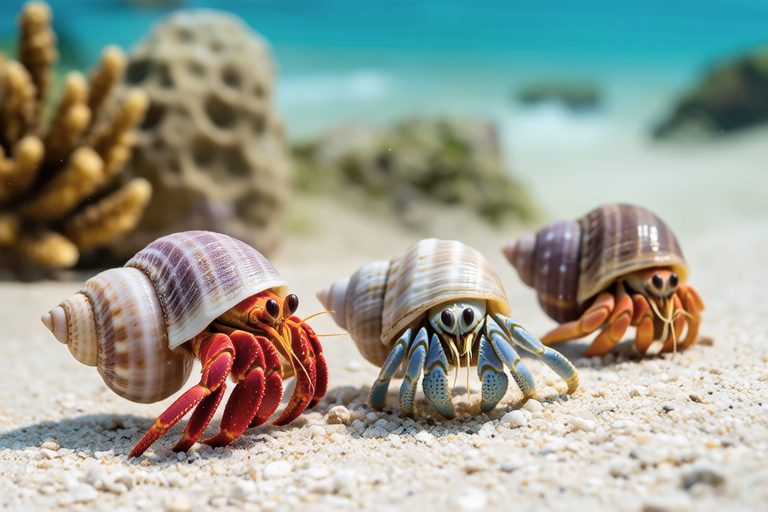
Hermit Crabs: The Underestimated Social Creatures of the Shell World
When most people think of hermit crabs, they envision solitary creatures scuttling along the seashore, seeking out discarded shells to call home. However, this popular image does little justice to the complex and vibrant social lives of these misunderstood crustaceans. Hermit crabs are far from solitary; they are, in fact, highly social animals with intricate behaviors that have evolved over millions of years. This article will delve into the fascinating world of hermit crabs, exploring their social behaviors, communication methods, and the important role they play in their ecosystems.
Habitat Preferences
Hermit crabs are found in a wide range of habitats, from tropical beaches to coral reefs and even freshwater environments. They prefer areas where they can find ample protection in the form of empty snail shells, which they use as mobile homes. These shells offer shelter from predators and harsh environmental conditions, allowing hermit crabs to thrive in diverse settings. Their adaptability to different environments is one of the reasons why hermit crabs are so widespread across the globe.
Dietary Needs
The diet of hermit crabs is varied and includes plant matter, small sea creatures, and organic debris found on the ocean floor. They are opportunistic feeders, meaning they will eat whatever food source is available. In the wild, hermit crabs play a crucial role in breaking down dead organic material, contributing to nutrient cycling in their ecosystems. When kept as pets, it’s essential to provide them with a balanced diet that mimics their natural feeding habits.
Complex Shell-Switching Dynamics
One of the most intriguing aspects of hermit crab behavior is their shell-switching process. Contrary to popular belief, hermit crabs do not randomly switch shells whenever they find one. Instead, they engage in a coordinated dance of negotiations, sometimes referred to as “shell fights.” When a larger shell becomes available, several hermit crabs may gather around it, each assessing its suitability. The smallest crab moves into the new shell first, followed by others in ascending order of size. This intricate process ensures that all members of the colony benefit from the acquisition of better protection.
Social Behaviors and Communication
Hermit crabs are highly social creatures that live in colonies, often numbering in the hundreds or even thousands. Within these colonies, they exhibit a variety of social behaviors, including cooperative feeding, grooming, and defense against predators. Despite their reputation for solitude, hermit crabs rely heavily on their community for survival. They communicate through a combination of chemical signals and physical gestures, such as antennae movements and leg waving. These signals help coordinate group activities and ensure the safety and well-being of the entire colony.
Misconceptions About Solitary Living
One of the most common misconceptions about hermit crabs is that they lead solitary lives. This misconception likely stems from their tendency to retreat into their shells when threatened or at rest. However, in reality, hermit crabs are highly social animals that depend on their communities for protection and resources. They often gather in large groups to feed, molt, and defend themselves against predators. Hermit crabs also demonstrate a surprising level of intelligence, capable of learning from experience and adapting their behaviors accordingly.
Intelligence and Adaptability
Research has shown that hermit crabs possess a level of intelligence that rivals that of many other animals. They are capable of problem-solving, learning from past experiences, and even using tools. For instance, some species have been observed using rocks as anvils to crack open hard-shelled prey. This adaptability allows hermit crabs to thrive in a wide range of environments, from the bustling coral reefs of the tropics to the quiet shores of temperate regions.
Contributions to Ecosystems
In addition to their social behaviors, hermit crabs play a vital role in maintaining the health of their ecosystems. By breaking down dead organic matter, they help recycle nutrients back into the environment, supporting the growth of other organisms. They also serve as prey for larger animals, contributing to the food web. Moreover, their presence can indicate the overall health of a marine ecosystem. A thriving population of hermit crabs suggests a balanced and healthy environment.
Pet Care Tips
If you’re considering keeping hermit crabs as pets, there are several key factors to keep in mind. First and foremost, provide them with plenty of space to move around and explore. Hermit crabs need room to engage in their natural behaviors, such as climbing, burrowing, and interacting with other crabs. Additionally, ensure that their enclosure is equipped with a variety of shells of different sizes and shapes, as this will allow them to switch shells as needed. It’s also important to maintain a stable temperature and humidity level, replicating their natural environment as closely as possible.
Conclusion
Hermit crabs are far more than just the solitary scavengers they are often portrayed as. These fascinating creatures are social, intelligent, and deeply connected to their environments. From their complex shell-switching dynamics to their intricate communication methods, hermit crabs are a testament to the rich diversity of life in the oceans. Understanding and appreciating the true nature of hermit crabs not only enhances our knowledge of marine ecosystems but also enriches our appreciation of these remarkable animals. Whether in the wild or as cherished pets, hermit crabs continue to surprise and delight those who take the time to observe and learn about them.
