Turtle Tales: How the Unique Three-Striped Box Turtle is Thriving Against Odds
In the vast tapestry of nature, few creatures can boast the resilience and adaptability of the three-striped box turtle (Chrysemys picta bellii). This small yet remarkable reptile has carved out a niche in some of North America’s most diverse ecosystems, from the lush forests of the eastern United States to the sun-drenched plains of the Midwest. With its distinctive physical attributes and unique behaviors, the three-striped box turtle is more than just another species; it’s a testament to nature’s ability to thrive in the face of adversity.
The Three-Striped Box Turtle: A Living Gem
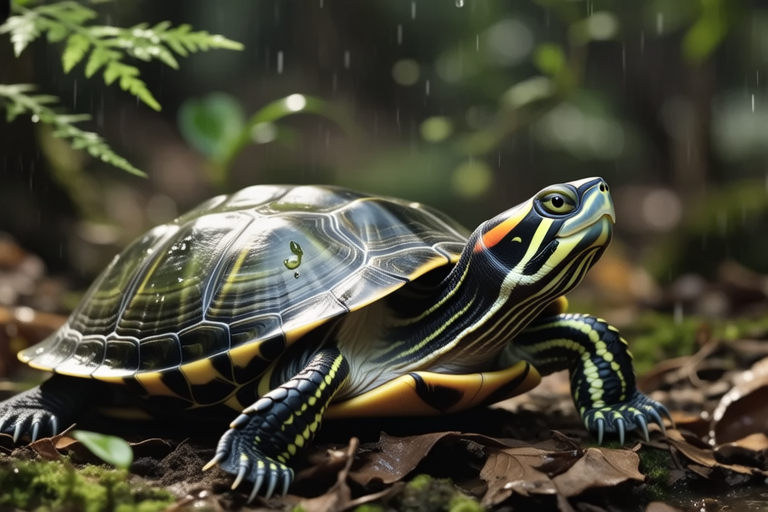
At first glance, the three-striped box turtle is a sight to behold. Its high-domed carapace, or upper shell, is adorned with a striking pattern of yellow lines that create three distinct stripes, giving it its common name. These stripes serve as a natural camouflage against predators, blending into the dappled sunlight filtering through the leaves of the forest floor. The plastron, or lower shell, is hinged, allowing the turtle to fully withdraw its head, limbs, and tail inside its protective shell when threatened.
The three-striped box turtle’s habitat is equally varied and fascinating. Found primarily in the eastern and central regions of the United States, these turtles inhabit deciduous woodlands, wet meadows, and even suburban areas. They prefer environments with plenty of cover, such as fallen logs, leaf litter, and dense vegetation. These habitats provide both shelter and a rich diet of insects, slugs, worms, and plant matter. Their omnivorous diet allows them to adapt to changing food sources throughout the seasons.
Challenges Faced by the Three-Striped Box Turtle
Despite their resilience, three-striped box turtles face numerous challenges in their struggle for survival. One of the primary threats comes from habitat loss due to deforestation, urbanization, and agricultural expansion. As human development encroaches upon their natural habitats, the turtles are forced to navigate increasingly fragmented landscapes, often leading to isolation and reduced genetic diversity.
Predation is another significant threat. Raccoons, skunks, and foxes are among the many animals that prey on turtle eggs and hatchlings. Adult turtles are also vulnerable to larger predators, though their ability to retract into their shells offers some protection. In addition, the illegal pet trade poses a serious risk, with many turtles being captured and sold as exotic pets, further depleting wild populations.
Environmental changes, particularly climate change, also impact the three-striped box turtle. Rising temperatures and altered precipitation patterns can disrupt breeding cycles and affect the availability of food resources. Additionally, increased frequency of severe weather events can lead to flooding and erosion, damaging nesting sites and habitats.
Conservation Efforts and Scientific Insights
Thankfully, there are dedicated individuals and organizations working tirelessly to protect the three-striped box turtle. Conservationists have implemented various strategies to combat the threats facing this species. Habitat restoration projects aim to reconnect fragmented areas, creating corridors that allow turtles to move freely between different parts of their range. Educational programs raise awareness about the importance of protecting these turtles and their habitats, encouraging local communities to participate in conservation efforts.
Scientific research has provided valuable insights into the three-striped box turtle’s resilience and adaptive behaviors. Studies have shown that these turtles possess remarkable abilities to withstand environmental stressors. For instance, they can survive periods of drought by burying themselves in mud or leaf litter, entering a state of dormancy known as estivation. This adaptation allows them to conserve energy and avoid dehydration during dry spells.
Moreover, genetic research has revealed that the three-striped box turtle exhibits high levels of genetic diversity, which enhances its ability to adapt to changing conditions. This genetic variability may be one of the key factors contributing to the species’ long-term survival. Scientists are also exploring the potential of assisted reproduction techniques, such as artificial insemination and cryopreservation, to boost population numbers in captivity before releasing them into the wild.
Success Stories in Conservation
Several conservation projects have already demonstrated promising results in preserving the three-striped box turtle. One notable example is the work of the Wildlife Rescue League in Virginia. Over the past decade, the organization has successfully rehabilitated hundreds of injured and sick turtles, returning them to the wild after treatment. Their efforts have not only improved individual turtle health but also contributed to overall population recovery.
In Missouri, the Department of Conservation has launched a comprehensive program aimed at protecting turtle nesting sites. By installing predator-proof fencing around known nesting areas, they have significantly reduced predation rates. Additionally, volunteers monitor nesting activity and assist with the relocation of nests to safer locations. These efforts have resulted in higher hatchling survival rates, ensuring the continuation of future generations.
Another inspiring project is the Eastern Box Turtle Head Start Program in New York. This initiative involves collecting eggs from the wild and incubating them in controlled environments until the hatchlings reach a size large enough to better evade predators. Once they are strong enough, the young turtles are released back into their natural habitats. This approach has proven highly effective, with many released turtles surviving and thriving in the wild.
Call to Action: Supporting Ongoing Initiatives
The stories of the three-striped box turtle are not just tales of survival but also calls to action. Each success story underscores the importance of continued support for conservation efforts. Whether through financial contributions, volunteer work, or simply spreading awareness, every effort counts in the fight to preserve these remarkable creatures.
For those interested in getting involved, there are numerous ways to contribute. Donating to reputable wildlife organizations, participating in citizen science projects, and advocating for stronger environmental policies are all impactful actions. By supporting ongoing initiatives, we can ensure that future generations will have the opportunity to witness the beauty and resilience of the three-striped box turtle.
In conclusion, the three-striped box turtle stands as a symbol of hope and perseverance in the face of environmental challenges. Through their unique adaptations and the tireless efforts of conservationists, these turtles continue to thrive against the odds. Let us join forces to protect and preserve their habitats, ensuring a bright future for these living gems of the natural world.
