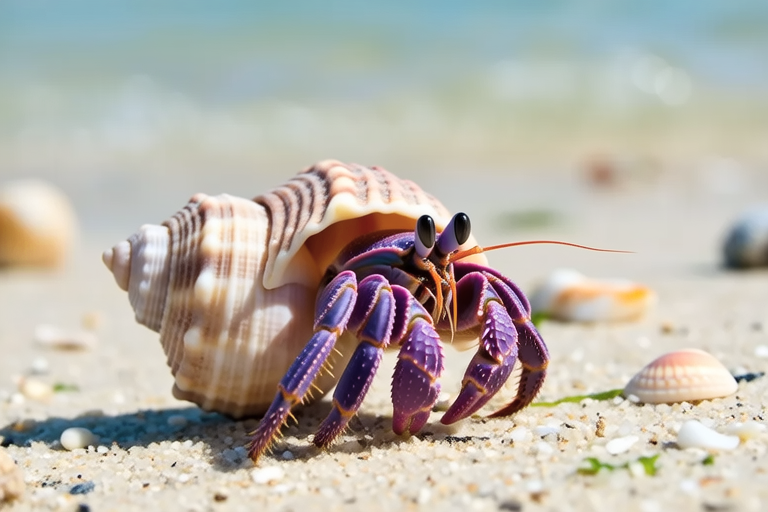
From Sand to Shell: Unveiling the Secret Life of Hermit Crabs
Hermit crabs are fascinating creatures known for their unique adaptation of using discarded shells for protection. These crustaceans, belonging to the superfamily Paguroidea, have evolved over millions of years to utilize empty mollusk shells as mobile homes. This adaptation allows them to protect their soft abdomens from predators, while also providing shelter against harsh environmental conditions.
Natural Habitats and Ecosystem Interaction
Hermit crabs are predominantly found in coastal environments, including beaches, rocky shores, and coral reefs. They thrive in tropical and subtropical regions around the world, where the abundance of suitable shells ensures their survival. In these ecosystems, hermit crabs play a crucial role in nutrient cycling and organic matter decomposition. They are often seen scavenging for food along the shoreline, contributing to the breakdown of dead organisms and enriching the soil.
Their interaction within these ecosystems extends beyond mere scavenging. Hermit crabs act as keystone species, influencing the distribution and abundance of other organisms. By burrowing into the sand or rock crevices, they create microhabitats that provide shelter for smaller marine life, enhancing biodiversity. Additionally, their presence can help control populations of certain species, maintaining ecological balance.
The Molting Process: Growth and Shell Exchange
One of the most intriguing aspects of hermit crab biology is the molting process. Molting occurs when the crab outgrows its current shell and must shed its exoskeleton to accommodate growth. Prior to molting, hermit crabs may seek out secluded areas, where they can safely undergo this transformation. During this period, they become vulnerable and require a new shell to protect their soft bodies.
The actual molting process involves the shedding of the old exoskeleton, revealing a new, softer one underneath. Over time, this new exoskeleton hardens, offering better protection. However, before this happens, hermit crabs must find a suitable replacement shell. This search is critical, as the wrong-sized shell could lead to injury or death. Once a new home is found, the crab moves in, sealing itself inside until the exoskeleton fully hardens.
Diet and Social Behaviors
Hermit crabs are omnivorous, feeding on a variety of organic matter, including decaying plant material, algae, and small invertebrates. Their diet is primarily scavenged from the environment, making them efficient recyclers within their ecosystems. While they are generally solitary creatures, hermit crabs do exhibit some social behaviors, particularly during the search for new shells. In some cases, groups of hermit crabs will gather around a promising shell, resulting in a lively competition for possession.
Communication among hermit crabs is subtle but effective. They use a combination of chemical signals and physical gestures to interact with one another. For example, when competing for a shell, hermit crabs may engage in ritualistic displays, tapping or nudging each other with their claws. These interactions help establish dominance and resolve conflicts without causing significant harm.
Ecosystem Role and Threats
In addition to their scavenging activities, hermit crabs contribute to the overall health of their ecosystems through their interactions with other species. They serve as prey for larger animals, such as fish and birds, and their burrowing activities can aerate the soil, improving water quality and nutrient distribution. Furthermore, hermit crabs play a vital role in seed dispersal, helping to maintain the diversity of coastal vegetation.
Despite their importance, hermit crabs face several threats in their natural habitats. Habitat destruction due to coastal development, pollution, and climate change pose significant risks to their survival. Additionally, the pet trade has led to the overharvesting of certain hermit crab species, depleting wild populations. Conservation efforts are essential to ensure the continued existence of these remarkable creatures.
Tips for Responsible Hermit Crab Care
If you choose to keep hermit crabs as pets, it’s important to do so responsibly. Provide a habitat that mimics their natural environment, complete with a variety of shells for them to explore and potentially adopt. Ensure the tank is well-ventilated and contains a substrate that allows for digging and burrowing. Offer a balanced diet consisting of fresh fruits, vegetables, and protein sources, along with occasional treats like fish flakes or shrimp.
Regular monitoring of your hermit crabs’ health is crucial. Keep an eye out for signs of stress, such as lethargy or refusal to eat. Maintain clean living conditions by regularly cleaning the tank and replacing any worn-out shells. Providing a stimulating environment with hiding spots and climbing structures can also enhance their well-being.
Lastly, consider the ethical implications of keeping hermit crabs as pets. Opt for captive-bred specimens whenever possible, and avoid purchasing wild-caught individuals. By making informed choices and providing proper care, you can enjoy the company of these fascinating creatures while promoting their conservation.
In conclusion, hermit crabs are more than just curious scavengers; they are integral components of coastal ecosystems. Their unique adaptations, social behaviors, and contributions to nutrient cycling make them truly remarkable. By understanding and respecting their needs, we can help ensure the survival of these incredible creatures for generations to come.
