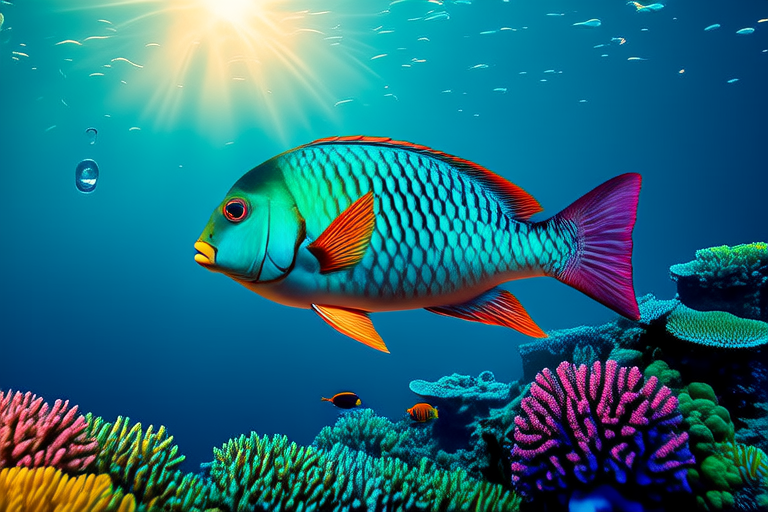
The Colorful World of Parrot Fish: Nature’s Underwater Artists
In the vast oceanic realm, few creatures capture the imagination like the parrot fish. These dazzling marine animals are not only a feast for the eyes but also vital contributors to the health and beauty of coral reefs. Their vibrant colors and unique behaviors make them stand out among other marine species, earning them the title of nature’s underwater artists.
A Kaleidoscope of Colors
Parrot fish are renowned for their stunning array of colors and intricate patterns. From electric blues and vibrant yellows to deep reds and striking purples, each species boasts its own distinct palette. The male parrot fish, particularly during mating season, often exhibits even more elaborate hues and patterns to attract potential mates. This display of color is not merely aesthetic; it serves as a form of communication within their species and between different marine organisms.
Their bodies are adorned with intricate designs that seem almost too beautiful to be true. Some species have stripes or spots that resemble abstract paintings, while others feature bold, contrasting colors that blend seamlessly into their surroundings. The diversity in their appearance is a testament to the rich biodiversity of marine ecosystems and the evolutionary adaptations that have taken place over millions of years.
Maintainers of Coral Reefs
Beyond their visual appeal, parrot fish play a crucial role in maintaining the delicate balance of coral reef ecosystems. As herbivores, they graze on algae that can otherwise smother corals, preventing them from receiving sunlight and nutrients necessary for survival. By keeping algae populations in check, parrot fish help ensure the health and growth of coral reefs, which are vital habitats for countless marine species.
One of the most remarkable aspects of parrot fish is their ability to create sand. As they feed on coral and algae, their powerful jaws crush these materials into tiny particles that eventually become part of the sandy seabed. This process is essential for the formation and maintenance of beaches, further highlighting the significant impact these fish have on marine and coastal environments.
Unique Behaviors
Parrot fish exhibit a range of fascinating behaviors that add to their allure. One of the most notable is their nightly transformation. Many species of parrot fish produce a mucus cocoon around themselves before sleep, believed to act as a protective barrier against predators. This behavior, while common in the animal kingdom, is particularly intriguing when observed in these colorful fish.
Another interesting behavior is their tendency to change sex throughout their lives. Most parrot fish begin their lives as females and later transition to males, a phenomenon known as sequential hermaphroditism. This ensures genetic diversity within their populations and helps maintain healthy breeding cycles.
Dietary Habits
Parrot fish are primarily herbivorous, feeding on algae that grow on rocks, coral, and other surfaces within their habitat. They possess specialized teeth arranged in rows that function like a beak, allowing them to scrape algae off hard surfaces. This diet not only sustains them but also contributes to the overall health of coral reefs by preventing algal overgrowth.
Some species may occasionally supplement their diet with small invertebrates, but this is rare. The majority of their nutritional intake comes from algae, making them key players in the marine food web. Their feeding habits also influence the distribution of nutrients within their ecosystems, contributing to the overall biodiversity.
Species Diversity and Habitat Preferences
The family of parrot fish, Scaridae, comprises approximately 90 recognized species. These species are distributed across tropical and subtropical waters worldwide, with the highest diversity found in the Indo-Pacific region. Each species has adapted to specific environmental conditions, leading to variations in size, coloration, and behavior.
Parrot fish prefer warm, shallow waters where coral reefs thrive. They are commonly found in lagoons, reefs, and areas with abundant coral formations. The complexity of these environments provides ample hiding places and food sources, supporting the diverse populations of parrot fish. Their preference for these habitats underscores the importance of preserving coral reefs for the continued existence of these vibrant creatures.
Threats and Conservation
Despite their critical role in marine ecosystems, parrot fish face numerous threats that jeopardize their survival. Overfishing is one of the most significant challenges, as their meat is highly valued in many parts of the world. Additionally, habitat destruction due to climate change, pollution, and human activities poses a serious risk to their natural habitats.
Efforts to conserve parrot fish populations include establishing marine protected areas and promoting sustainable fishing practices. Educating local communities about the importance of these fish for marine biodiversity is also crucial in ensuring their long-term survival. By raising awareness and implementing protective measures, we can help preserve these colorful and vital members of our oceans.
Artistic Influence on Marine Life
Parrot fish are not just passive participants in marine ecosystems; they actively contribute to the artistic expression of underwater environments. Their vibrant colors and dynamic behaviors inspire awe and wonder in all who encounter them. Through their interactions with corals and other marine organisms, they create a living tapestry that celebrates the diversity and beauty of life beneath the waves.
Their presence enhances the visual appeal of coral reefs, attracting divers and snorkelers from around the globe. This influx of visitors supports local economies and raises awareness about the importance of marine conservation. In essence, parrot fish are ambassadors for the oceans, drawing attention to the need for protecting these fragile yet wondrous ecosystems.
Conclusion
The colorful world of parrot fish is a testament to the incredible diversity and beauty of marine life. These underwater artists, with their vibrant colors, unique behaviors, and vital roles in coral reef ecosystems, continue to captivate and inspire. As we strive to protect our oceans, it is essential to recognize the integral part parrot fish play in maintaining the health and vibrancy of marine environments. By understanding and appreciating these remarkable creatures, we can work towards ensuring their survival and the preservation of the enchanting underwater worlds they inhabit.
