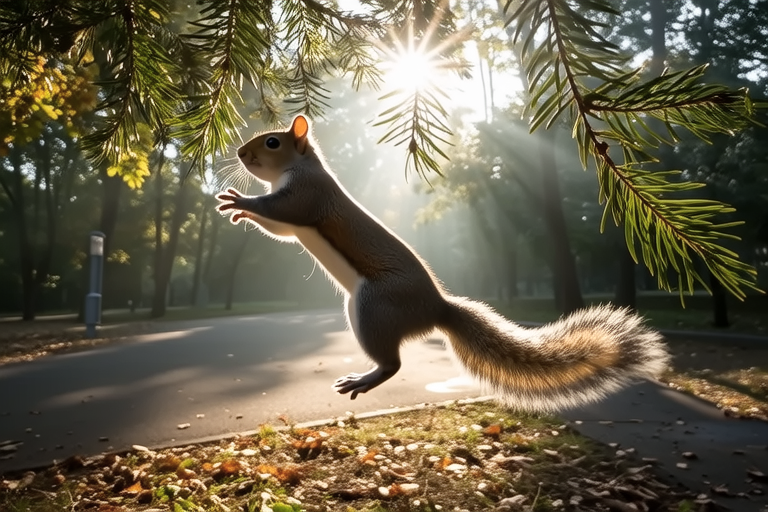
The Acrobatic Athletes: How Squirrels Master Parkour Daily
When we think of parkour, images of humans flipping and vaulting over obstacles often come to mind. However, in the bustling cities and serene forests, another set of acrobatic athletes is quietly mastering parkour every day – the squirrels. These small mammals, often overlooked in their daily routines, exhibit an extraordinary display of agility and athleticism. From leaping between branches in dense forests to scaling buildings in urban landscapes, squirrels have adapted their bodies and behaviors to thrive in diverse environments. This article delves into the fascinating world of these acrobatic athletes, exploring the science behind their incredible abilities and the challenges they face.
The Natural Agility of Squirrels
Squirrels are renowned for their nimble movements, which are a result of millions of years of evolution. Their slender yet muscular bodies are perfectly suited for life in the trees. The hind legs of squirrels are longer than their forelegs, providing them with excellent propulsion power when jumping. Their tails, while serving as a counterbalance during leaps, also aid in steering and braking. This unique anatomy allows squirrels to execute precise jumps and landings, even on narrow branches or ledges.
In urban settings, squirrels face a different set of challenges. They must navigate streets, sidewalks, and buildings, all while avoiding predators and finding food. Despite these obstacles, they continue to display remarkable agility. Observers often witness squirrels dashing across busy roads, leaping from one vehicle to another, and scaling buildings with ease. Their ability to move swiftly and gracefully through these environments showcases their adaptability and resilience.
Daily Parkour Routines
The daily life of a squirrel is filled with constant movement. In natural environments, they spend most of their time foraging for food, which involves climbing trees, running along branches, and leaping from tree to tree. Their routine begins early in the morning when they emerge from their nests, known as dreys, to search for nuts, seeds, and fruits. As they travel from tree to tree, they leap distances up to several meters, relying on their powerful hind legs to propel them forward.
Urban squirrels, on the other hand, have adapted their routines to include man-made structures. They can be seen darting across rooftops, scaling drainpipes, and even using fences and railings as pathways. Their ability to traverse complex urban landscapes demonstrates their versatility and resourcefulness. These animals are not just surviving in cities; they are thriving, creating new habitats within the concrete jungle.
Physical Adaptations for Parkour
Several physical adaptations allow squirrels to perform their daily parkour routines. Their claws, sharp and curved, provide a firm grip on various surfaces, enabling them to climb trees and scale walls effortlessly. The pads on their feet are equipped with tiny hairs that help increase friction, ensuring a secure hold even on smooth surfaces. Additionally, squirrels possess excellent eyesight, which aids in judging distances accurately when leaping from one point to another.
Another crucial adaptation is their flexible spine. This allows squirrels to twist and turn mid-air, adjusting their position to land safely. Their strong muscles, particularly in the hindquarters, contribute significantly to their jumping prowess. These muscles contract rapidly, propelling the squirrel forward with great force. The combination of these physical traits makes squirrels adept at navigating their environment with speed and precision.
Challenges Overcome by Squirrels
Despite their impressive abilities, squirrels face numerous challenges in both natural and urban environments. In forests, they must avoid predators such as hawks, owls, and snakes. To do this, they rely on their keen senses and quick reflexes. When threatened, squirrels will often freeze in place, blending into their surroundings, or make sudden movements to confuse their predator. Their agility also comes in handy when escaping danger, as they can leap from branch to branch at high speeds.
In urban areas, squirrels encounter a different set of threats. Cars pose a significant danger, and squirrels must learn to cross roads safely. They have developed strategies to minimize risks, such as waiting for gaps in traffic or using vehicles as stepping stones. However, accidents still occur, highlighting the ongoing struggle between survival and adaptability. Additionally, squirrels must compete with other animals for limited resources, including food and nesting sites. Their ability to find creative solutions to these challenges underscores their intelligence and resilience.
Benefits Derived from Parkour Skills
The remarkable parkour skills of squirrels offer numerous benefits. Firstly, their agility allows them to access food sources that may otherwise be out of reach. By leaping from tree to tree or scaling buildings, squirrels can explore larger territories and find a greater variety of food. This increases their chances of survival, especially during times of scarcity. Secondly, their ability to move quickly and efficiently helps them evade predators, ensuring their safety.
Moreover, the physical exercise involved in their daily routines contributes to their overall health and fitness. Jumping, climbing, and running keep their muscles toned and their cardiovascular systems functioning optimally. This, in turn, enhances their stamina and endurance, allowing them to perform more complex maneuvers. The mental stimulation provided by their constant movement also plays a vital role in their well-being, keeping them alert and responsive to their environment.
Conclusion
Squirrels are true acrobatic athletes, showcasing remarkable agility and athleticism in their daily lives. Through millions of years of evolution, they have developed physical adaptations that enable them to navigate both natural and urban environments with ease. Their ability to overcome challenges and derive benefits from their parkour skills highlights their resilience and intelligence. Next time you see a squirrel darting across a road or leaping from a branch, take a moment to appreciate the acrobatic athlete performing its daily routine. These small creatures, often taken for granted, are a testament to the wonders of nature and the marvels of adaptation.
