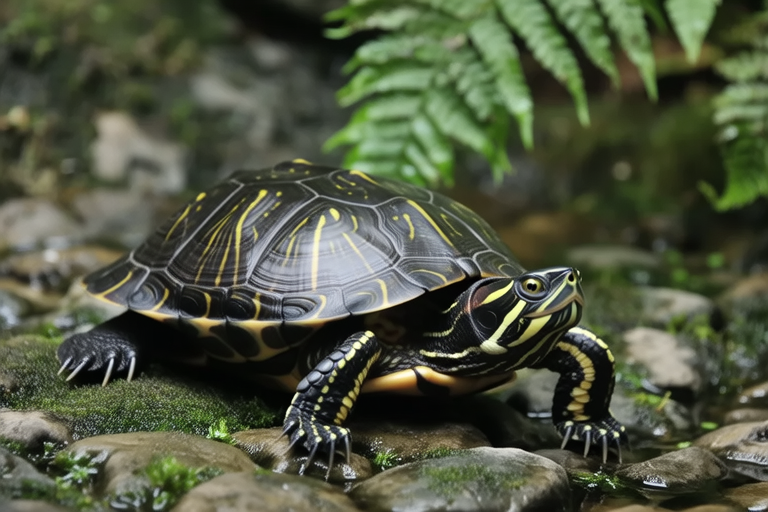
Adorable and Rare: Life with a Three-Striped Box Turtle
The world of reptiles is vast and diverse, but there’s one species that stands out for its unique charm and rarity: the three-striped box turtle (Terrapene triunguis). This petite, shelled creature is not only adorable but also captivating with its distinctive appearance and behaviors. If you’re considering adopting a three-striped box turtle or simply want to learn more about these fascinating animals, read on to discover what makes them such special pets.
A Unique Appearance
Three-striped box turtles are easily recognizable by their striking shell patterns. Their high-domed carapace (upper shell) features three yellow stripes running along each side, which give them their name. These stripes contrast beautifully against the dark brown or black background of the shell. The plastron (bottom shell) is hinged, allowing the turtle to close itself completely inside when threatened, much like a clam.
In addition to their eye-catching shells, these turtles have attractive heads adorned with red or orange markings around the eyes, adding to their overall appeal. Males tend to have red irises, while females usually have brown ones, making it easier to distinguish between genders.
Behavioral Traits
Three-striped box turtles are known for their curious and active nature. They spend most of their day exploring their environment, searching for food, and basking in the sun. Unlike some other turtle species, they are quite agile and can climb over obstacles if necessary. However, they prefer flat surfaces where they can stretch out comfortably.
These turtles are generally docile and gentle, especially when handled properly from an early age. They may exhibit some defensive behaviors, such as withdrawing into their shells, but they rarely bite unless provoked. Socialization is key to ensuring your turtle remains calm and approachable.
Dietary Needs
Maintaining a balanced diet is crucial for the health of your three-striped box turtle. In the wild, they are omnivorous, feeding on a variety of plant matter, insects, and small vertebrates. As pets, it’s important to replicate this diversity in their diet.
- Vegetables: Offer leafy greens like kale, collard greens, and dandelion leaves. Avoid iceberg lettuce as it lacks nutritional value.
- Fruits: Provide small amounts of fruits such as strawberries, blueberries, and melons. Fruits should be given sparingly due to their high sugar content.
- Insects: Feed crickets, mealworms, and earthworms occasionally to meet protein requirements.
- Calcium: Dust vegetables and insects with calcium powder to support bone health.
Ensure fresh water is always available for drinking and soaking. A shallow dish works well; just make sure it’s easy for the turtle to get in and out of.
Habitat Requirements
Creating an appropriate habitat is essential for keeping your three-striped box turtle healthy and happy. Start by providing a spacious enclosure that mimics their natural environment. A 40-gallon tank or larger is recommended for one adult turtle. Use a substrate like coconut fiber or mulch, which retains moisture and allows for burrowing.
Temperature regulation is vital. Install a heat lamp on one side of the enclosure to create a basking spot, maintaining temperatures between 85°F and 90°F. The cooler end should remain around 75°F. Use a thermometer to monitor these conditions accurately.
Humidity levels should be kept at approximately 60%. Mist the enclosure daily or use a humidifier to achieve this. Provide hiding spots made from logs, rocks, or commercial turtle shelters to give your pet privacy and security.
