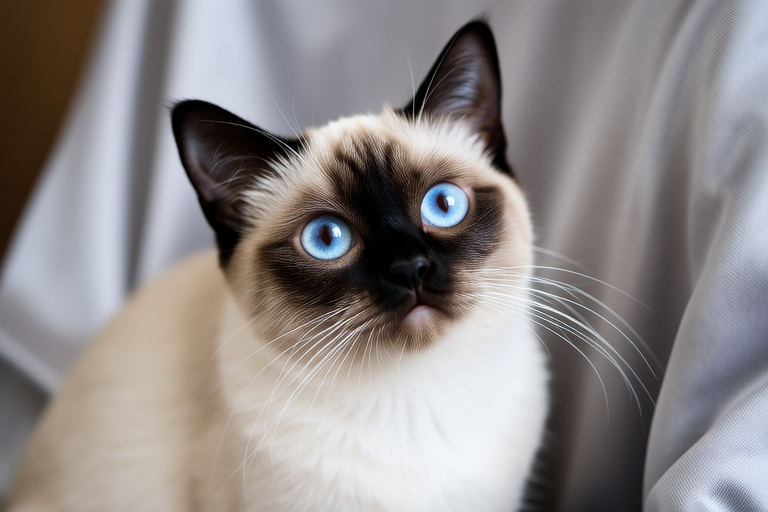
The Genetic Origins and Historical Significance of Siamese Cats’ Blue Eyes
Siamese cats are renowned for their striking blue eyes, which have captivated cat enthusiasts for centuries. The distinctive blue color is not only visually appealing but also carries significant historical and cultural weight. This article explores the genetic origins, historical anecdotes, and cultural significance behind the Siamese cats’ blue eyes, delving into the role of temperature sensitivity, selective breeding, and health considerations.
Genetic Origins
The blue eyes of Siamese cats are primarily attributed to a genetic mutation that affects the production of melanin, the pigment responsible for skin, hair, and eye color. This mutation is known as the pointed or seal point gene, which limits the production of melanin to the cooler parts of the cat’s body, such as the extremities (ears, paws, tail, and face). In the warmer areas of the body, melanin production is inhibited, leading to lighter-colored fur and blue eyes.
This genetic mutation is dominant, meaning that if one parent carries the gene, it is highly likely that the offspring will inherit the characteristic blue eyes. The gene responsible for this phenomenon is C (chocolate), which is part of the c locus. When the c locus is affected by the pointed gene, it leads to the restricted distribution of melanin, resulting in the striking blue eyes and the characteristic coloration of the Siamese cat.
Temperature Sensitivity
The development of the Siamese cat’s blue eyes is closely linked to temperature sensitivity. Melanin production is temperature-dependent; it occurs more readily in cooler areas of the body. The cooler parts of the Siamese cat’s body, particularly around the eyes, result in lower melanin production, leading to the blue coloration. This temperature sensitivity explains why the eyes of Siamese kittens are initially brown or green at birth, changing to blue as they grow older and their body temperature stabilizes.
Research has shown that the temperature difference between the body core and the extremities can be as much as 10°C (18°F). This temperature gradient is crucial for the development of the characteristic blue eyes. As the kitten matures, the cooler areas of the body, including the eyes, continue to produce less melanin, resulting in the permanent blue coloration.
Ancient Thai Legends
The Siamese cat’s blue eyes have been celebrated in ancient Thai legends, where these felines were revered for their intelligence and loyalty. One popular legend tells the story of a Siamese cat tasked with guarding a sacred Buddha image. To prevent the statue from being damaged, the cat wrapped its tail around the statue’s ears, causing its ears to become cold and white, while the rest of its body remained warm. This legend not only explains the origin of the Siamese cat’s color pattern but also highlights the cultural significance of the breed in Thailand.
In another tale, Siamese cats were said to have been used to cool down hot teacups by wrapping their tails around them. This act of service was believed to have contributed to the development of the Siamese cat’s distinctively colored fur and blue eyes. These legends emphasize the close bond between humans and Siamese cats in Thai culture, where they were often kept as companions and protectors.
Selective Breeding
The preservation of the Siamese cat’s blue eyes over centuries is largely due to selective breeding practices. Breeders have consistently chosen cats with the most pronounced blue eyes and other desirable traits, ensuring that the characteristic continues to be passed down through generations. This selective breeding has also led to the development of various sub-breeds, each with its own unique features, but all sharing the iconic blue eyes.
The process of selective breeding began in the 19th century when the first Siamese cats were exported from Thailand to Europe and North America. These early imports were carefully selected for their striking appearance and behavior, which included their blue eyes. Over time, breeders focused on maintaining the purity of the breed while enhancing its physical characteristics, including the blue eyes. This focus has resulted in the consistent presence of the blue-eyed trait in Siamese cats today.
Health Considerations
While the blue eyes of Siamese cats are a defining feature of the breed, they can also be associated with certain health issues. One common condition is hereditary endothelial dystrophy, a disorder that affects the cornea and can lead to cloudiness or opacity. Another concern is glaucoma, a disease characterized by increased pressure within the eye, which can cause pain and vision loss. Regular veterinary check-ups and early intervention can help manage these conditions and ensure the overall health of the cat.
It is important for owners of Siamese cats to be aware of these potential health issues and to take proactive steps to maintain their pet’s ocular health. Routine eye examinations and prompt treatment of any signs of discomfort or changes in vision are essential. Additionally, providing a balanced diet rich in antioxidants and omega-3 fatty acids can support overall eye health and reduce the risk of age-related eye problems.
Modern Scientific Understanding
Recent advancements in genetic research have provided a deeper understanding of the molecular mechanisms underlying the Siamese cat’s blue eyes. Studies have identified specific mutations in the TYRP1 gene, which plays a critical role in melanin production. These mutations affect the enzyme tyrosinase-related protein 1, which is involved in the synthesis of melanin. The reduced activity of this enzyme in cooler areas of the body results in the limited production of melanin and the characteristic blue eyes.
Furthermore, researchers have discovered that the expression of the TYRP1 gene is influenced by temperature-sensitive regulatory elements. These elements respond to variations in body temperature, leading to differential expression of the gene in different parts of the body. This temperature-dependent regulation provides a molecular explanation for the development of the Siamese cat’s blue eyes and helps to elucidate the genetic basis of this fascinating trait.
Understanding the genetic factors that contribute to the blue eyes of Siamese cats not only enhances our appreciation of the breed’s unique characteristics but also informs breeding practices and healthcare strategies. By identifying the specific genes and regulatory mechanisms involved, researchers can develop targeted interventions to mitigate potential health risks associated with the blue-eyed phenotype.
Conclusion
The blue eyes of Siamese cats are a captivating blend of genetics, history, and culture. From ancient Thai legends to modern genetic research, the story of the Siamese cat’s blue eyes spans centuries and continents. The unique temperature sensitivity of melanin production in cooler areas of the body, combined with selective breeding practices, has preserved this striking characteristic over time. While the blue eyes bring beauty and charm to the breed, they also come with certain health considerations that require careful management.
As our understanding of the genetic underpinnings of the Siamese cat’s blue eyes continues to evolve, so too does our ability to appreciate and care for these remarkable animals. The enduring popularity of Siamese cats testifies to the enduring appeal of their distinctive blue eyes, a trait that has captured the hearts of cat lovers around the world.
