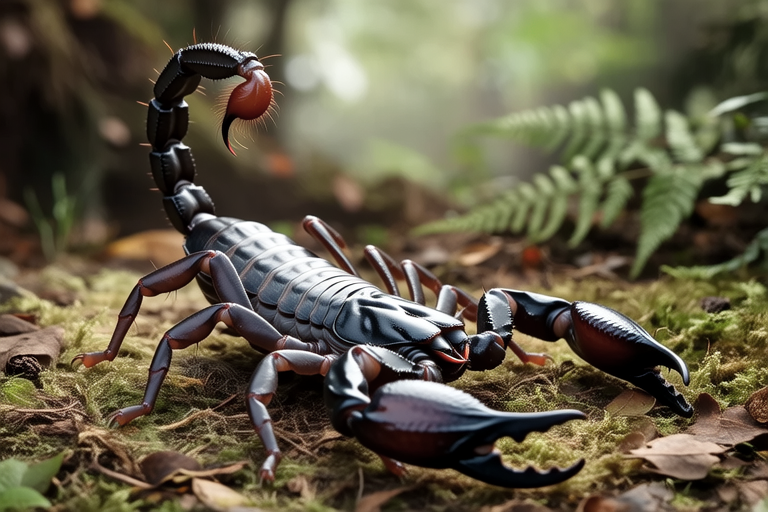
The Fascinating World of Heterometrus Spinifer: A Deep Dive into the Unique Scorpion Species
Introduction:
Scorpions, those enigmatic creatures of the night, have long captured the human imagination. Among the many species that populate our planet, the Heterometrus spinifer stands out for its unique characteristics and behaviors. This article explores the world of the Heterometrus spinifer, delving into its physical traits, dietary habits, reproductive processes, interactions with its environment, and debunking common myths surrounding these fascinating arachnids.
Physical Traits of Heterometrus Spinifer
The Heterometrus spinifer, also known as the Indian forest scorpion, is a medium-sized scorpion with a body length ranging from 6 to 9 centimeters. Its most striking feature is its robust pincers, which are significantly larger than its tail. These powerful claws are used for capturing prey and defense. The scorpion’s exoskeleton is thick and segmented, providing protection against predators and environmental stressors. The coloration of the Heterometrus spinifer ranges from dark brown to black, making it well-camouflaged in its natural habitat.
The venom apparatus of the Heterometrus spinifer is located at the tip of its tail, where it houses a pair of venom glands connected to a stinger. This venom contains a cocktail of neurotoxins that can paralyze small prey and serve as a defensive mechanism against larger threats. Despite its fearsome appearance, the venom of the Heterometrus spinifer is generally considered mild, causing localized pain and swelling in humans. However, individuals with allergies may experience more severe reactions.
Dietary Habits of Heterometrus Spinifer
The Heterometrus spinifer is primarily an insectivore, preying on a wide variety of insects such as crickets, beetles, and grasshoppers. It is also known to feed on other small invertebrates, including spiders and centipedes. Scorpions are opportunistic hunters, relying on their keen sense of touch and smell to locate prey. Their large pincers are used to grasp and crush their victims, while their venom ensures rapid immobilization.
Interestingly, the Heterometrus spinifer has been observed exhibiting cannibalistic tendencies, particularly during times of food scarcity. This behavior underscores the importance of understanding the ecological context in which these animals live. By studying the dietary habits of the Heterometrus spinifer, scientists gain valuable insights into the dynamics of ecosystems and the roles that individual species play within them.
Reproductive Process of Heterometrus Spinifer
The reproductive cycle of the Heterometrus spinifer is a complex and fascinating process. Mating typically occurs during the rainy season when humidity levels are high. Male and female scorpions engage in a courtship dance, which involves the male grasping the female’s pincers and leading her in a series of movements. Once the female is receptive, the male deposits a spermatophore onto the ground, which the female then picks up with her genital opening.
Pregnancy lasts approximately six months, after which the female gives birth to live young. Typically, she will give birth to between 10 and 40 offspring, depending on factors such as nutrition and environmental conditions. The newborn scorpions, known as scorplings, are born in a brood sac attached to the mother’s underside. They remain there for several days before emerging and dispersing. The mother provides no further care after this period, leaving the scorplings to fend for themselves.
Interactions with Its Environment
The Heterometrus spinifer is native to tropical regions of Southeast Asia, including India, Thailand, and Malaysia. It thrives in humid, forested areas, often found under logs, rocks, and leaf litter. The scorpion’s burrowing behavior helps it regulate its body temperature and conserve moisture. During the day, it remains hidden in its burrow, emerging at night to hunt.
Despite its formidable appearance, the Heterometrus spinifer plays a crucial role in its ecosystem. As a predator, it helps control populations of harmful insects, contributing to the overall balance of the environment. Additionally, the scorpion’s presence can serve as an indicator of the health of its habitat. Changes in the distribution or abundance of scorpions can signal shifts in environmental conditions, prompting further investigation.
Myths and Misconceptions Surrounding Heterometrus Spinifer
One of the most pervasive myths about scorpions, including the Heterometrus spinifer, is that they glow under ultraviolet light. While it is true that some species of scorpions exhibit fluorescence, this phenomenon is not universal. The Heterometrus spinifer does not fluoresce, and the myth likely stems from observations of other species.
Another misconception is that all scorpions are highly venomous and dangerous to humans. In reality, the vast majority of scorpion species pose little threat to people. The venom of the Heterometrus spinifer is relatively mild, and fatalities from scorpion stings are extremely rare. Education and awareness campaigns can help dispel these myths and foster a greater appreciation for these misunderstood creatures.
Scientific Insights
Recent research has shed light on the sensory capabilities of the Heterometrus spinifer
