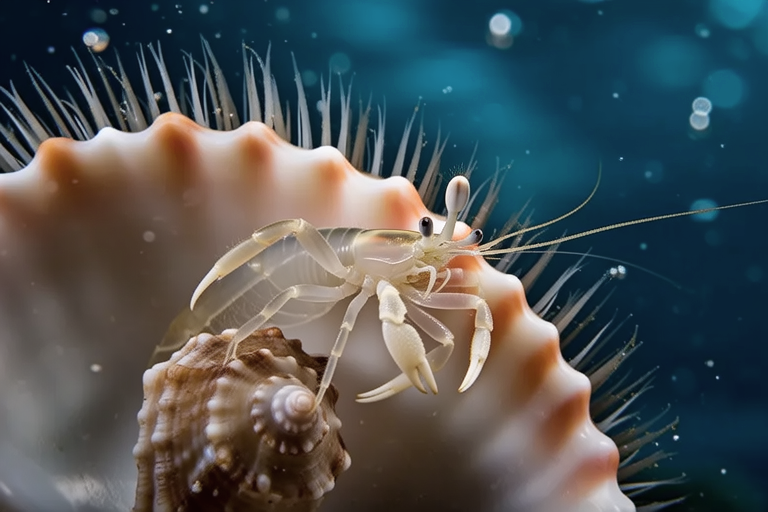
Buddies for Life: How Pea Crabs Coexist with Marine Mollusks
In the vast, mysterious world of marine ecosystems, there exist intricate relationships between various species that defy the notion of competition as the sole driver of evolution. Among these fascinating partnerships are those between pea crabs (Pinnotheridae) and their hosts, marine mollusks. This article delves into the unique symbiotic relationship between pea crabs and marine mollusks, highlighting the benefits, mechanisms, and adaptations of this mutualistic interaction. We will also explore the challenges faced by these relationships in the face of changing ocean conditions.
The Pea Crab: A Unique Marine Species
Pea crabs are small, delicate crustaceans named for their resemblance to the edible legume. They belong to the family Pinnotheridae and are found worldwide in coastal waters, often inhabiting the mantle cavities of bivalve mollusks. These tiny creatures are not just passive guests; they play a crucial role in the lives of their hosts, forming a mutually beneficial relationship known as mutualism.
Mutualism: A Win-Win Relationship
In a mutualistic relationship, both organisms benefit from the association. For pea crabs, the primary advantage is protection from predators and a stable food source. The bivalve hosts provide a safe haven for the crabs, shielding them from larger marine predators. In return, pea crabs contribute to the health of their hosts through the removal of parasites and detritus, thus enhancing the overall well-being of the bivalve.
This relationship is particularly advantageous for both parties because it allows them to thrive in environments where they might otherwise struggle independently. The pea crab’s small size and weak claws make it vulnerable to predation if left unprotected, while the bivalve host benefits from the cleaning services provided by the crab. This mutual support system has evolved over millions of years, resulting in a highly specialized and efficient partnership.
Specific Examples of Host-Parasite Relationships
Several species of marine mollusks serve as hosts for pea crabs, each adapting to accommodate these tiny companions. One notable example is the giant clam (Tridacna gigas), which provides a spacious habitat for pea crabs within its mantle cavity. Another common host is the oyster (Ostrea edulis), whose robust shell offers ample protection. Additionally, scallops (Pecten maximus) and mussels (Mytilus edulis) also host pea crabs, demonstrating the versatility of this symbiotic arrangement across different bivalve species.
Over time, these relationships have adapted to ensure the survival and prosperity of both species. For instance, some pea crabs have developed specialized mouthparts that allow them to feed on the mucous threads secreted by their hosts, providing an additional food source. Meanwhile, the bivalve hosts have evolved thicker shells and more complex mantle structures to better accommodate their tiny guests without compromising their own defense mechanisms.
Challenges and Threats to Symbiosis
Despite the resilience of these symbiotic relationships, they face significant challenges due to environmental changes, including pollution, climate change, and overfishing. Pollution can introduce harmful substances into the water, affecting both the pea crabs and their hosts. Climate change, particularly rising sea temperatures and ocean acidification, poses another threat. Increased acidity can weaken the shells of bivalves, making them more susceptible to predation and less able to provide adequate protection for their pea crab residents.
Overfishing also disrupts these symbiotic relationships by reducing the population of bivalve hosts. This can lead to a decline in the number of suitable habitats for pea crabs, potentially causing a ripple effect throughout the ecosystem. As such, it is crucial to understand the complexities of these interactions to develop effective conservation strategies that protect both the pea crabs and their hosts.
The Importance of Studying Mutualistic Relationships
The study of symbiotic relationships like those between pea crabs and marine mollusks is essential for a deeper understanding of marine ecosystems. By examining these interactions, scientists can uncover the underlying mechanisms that drive coevolution and adaptation. This knowledge can then be applied to develop sustainable management practices that preserve biodiversity and promote ecosystem health.
Furthermore, understanding these relationships can help us predict how marine ecosystems might respond to future environmental changes. For instance, knowing how pea crabs and their hosts adapt to stressors like increased acidity or temperature shifts could inform conservation efforts aimed at protecting vulnerable species and maintaining ecosystem balance.
In conclusion, the symbiotic relationship between pea crabs and marine mollusks exemplifies the complexity and beauty of nature. These partnerships offer valuable insights into the ways in which organisms can coexist and thrive despite challenging environmental conditions. By continuing to study and appreciate these relationships, we can work towards a greater understanding of our planet’s intricate web of life and contribute to its preservation for future generations.
