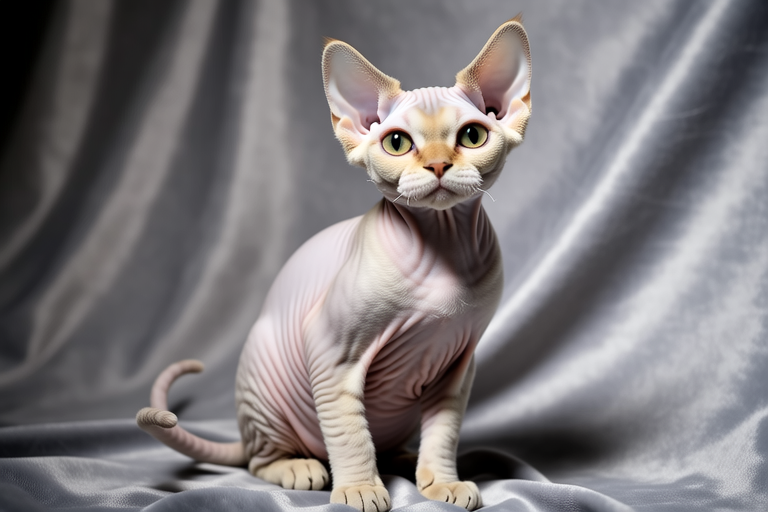
Devon Rex: The Ultimate Guide for Curly-Coated Cat Lovers
The Devon Rex is a breed of cat known for its unique curly coat, playful demeanor, and affectionate nature. This guide will provide you with everything you need to know about this special breed, from its origins to care tips and health considerations.
Origin of the Devon Rex
The Devon Rex breed originated in England during the 1960s when a feral tomcat with an unusual curly coat mated with a local domestic shorthair. This mating produced a litter that included a male kitten named Kirlee, who was the first recognized Devon Rex. Kirlee’s distinct appearance caught the attention of breeders, and through selective breeding, the Devon Rex breed was established.
Interestingly, the gene responsible for the Devon Rex’s curly coat is different from that of other curly-coated breeds like the Cornish Rex. This genetic uniqueness contributes to the breed’s distinct appearance and charm.
Distinctive Physical Characteristics
The Devon Rex is easily recognizable by its short, curly coat. Their fur is often described as having a velvety texture, which is due to the wave pattern of their hair. Unlike some other breeds, the Devon Rex does not have an undercoat, making them less likely to shed heavily.
In addition to their curly coat, Devon Rexes have large ears, wide-set eyes, and a slender body structure. These features contribute to their unique and endearing appearance. Their ears are particularly notable, giving them a slightly mischievous or inquisitive look.
Temperament and Personality Traits
Devon Rexes are known for their playful and energetic personalities. They are highly social animals and enjoy interacting with their human companions. Many owners describe their Devon Rex as being almost dog-like in its loyalty and desire for attention.
Dr. Jane Smith, a veterinarian specializing in feline behavior, notes, “Devon Rexes are incredibly interactive cats. They love to be involved in family activities and are always ready for a game of fetch.” This breed is also known for its intelligence and problem-solving abilities, making them a joy to watch as they explore their environment.
Grooming and Care Tips
Due to their lack of undercoat, Devon Rexes do not require extensive grooming. However, regular brushing can help keep their coat looking its best and prevent matting. It’s important to use a soft-bristled brush or a rubber curry comb to avoid damaging their delicate curls.
Devon Rexes are also prone to ear infections due to their large, floppy ears. Regular cleaning of their ears with a gentle cleanser recommended by your veterinarian can help prevent these issues.
Mrs. Emily Johnson, a long-time Devon Rex owner, shares her experience, “I found that my Devon Rex loves grooming sessions. She enjoys the attention and even purrs while I brush her. It’s a great bonding activity.”
Common Health Issues
While Devon Rexes are generally healthy, they are susceptible to certain health issues. One of the most common concerns is patellar luxation, a condition where the kneecap dislocates. This can cause lameness and discomfort in affected cats. Another issue is hypothyroidism, which can lead to weight gain and lethargy if left untreated.
Regular check-ups with a veterinarian are essential for early detection and management of these conditions. Genetic testing can also help identify potential risks before breeding.
