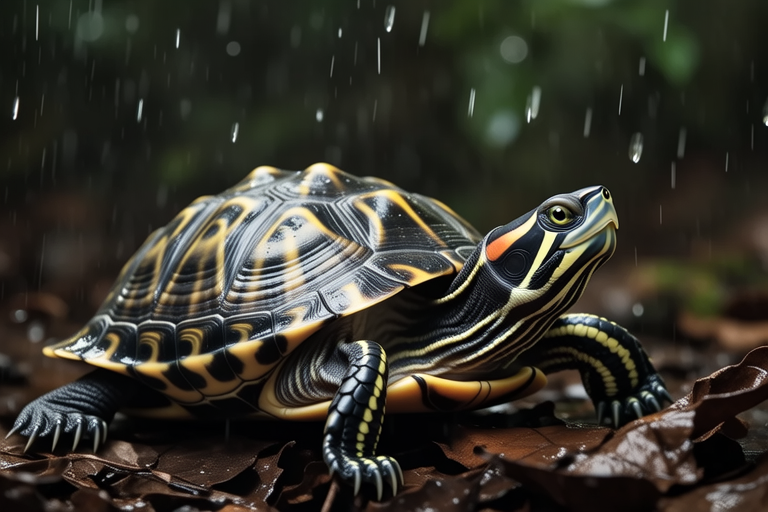
The Three-Striped Box Turtle: An Overview
The three-striped box turtle, scientifically known as cuora trifasciata, is a fascinating reptile that has captured the hearts of many pet enthusiasts. This turtle is renowned for its distinctive physical features, which include three prominent yellow stripes running along its dark brown or black shell. These stripes are what give the species its name and make it easily identifiable among other box turtles.
Physical Characteristics
Besides the striking three yellow stripes on its head, the three-striped box turtle possesses a high-domed carapace (upper shell) that ranges from olive green to dark brown. The plastron (lower shell) is usually yellowish or orange, often with dark blotches or spots. Males can be distinguished from females by their longer tails and slightly concave plastrons, while females tend to have shorter tails and flat plastrons. Additionally, males may exhibit brighter colors during breeding season.
Natural Habitat and Diet
In the wild, the three-striped box turtle inhabits areas such as forests, grasslands, and wetlands throughout parts of China, Vietnam, and Laos. They prefer environments with dense vegetation, providing ample hiding spots and access to water sources like streams or ponds. Their diet primarily consists of insects, worms, fruits, and vegetables. This omnivorous diet ensures they receive essential nutrients necessary for survival.
Their natural habitat influences their behavior when kept as pets. As forest dwellers, these turtles require plenty of space for exploration and hiding. In captivity, providing a suitable environment mimics their wild surroundings, encouraging healthy behaviors and reducing stress.
Care Tips for Potential Owners
Housing
Creating an appropriate enclosure is crucial for maintaining your three-striped box turtle’s health. A large terrarium or outdoor pen with at least 4 square feet per turtle is recommended. Ensure there’s enough space for swimming, basking, and exploring. Include various elements like rocks, branches, and plants to create a stimulating environment.
Temperature Requirements
Temperature plays a vital role in regulating metabolism and digestion. Maintain daytime temperatures between 75°F and 85°F (24°C to 29°C), dropping slightly at night. Install heat lamps or under-tank heaters if necessary. A UVB light source is also essential for calcium absorption and overall well-being.
Feeding Habits
Feed your three-striped box turtle a balanced diet consisting of commercial turtle pellets, fresh fruits (such as apples, berries), vegetables (like leafy greens and squash), and occasional protein sources (insects or lean meats). Avoid feeding them iceberg lettuce, as it lacks nutritional value. Offer food daily but monitor portions carefully to prevent obesity.
Comparison with Other Pets
Compared to other common pets like dogs or cats, three-striped box turtles require less attention and maintenance. Unlike dogs that need regular walks or cats that demand playtime, these turtles spend most of their time within their enclosures. However, this doesn’t mean they’re entirely independent; proper care still requires dedication.
When compared to fish, another popular aquatic pet, three-striped box turtles offer more interaction opportunities. While fish are fascinating to watch, they lack the personality and engaging behaviors seen in turtles. Additionally, caring for fish involves water changes and filtration systems, whereas turtles only need occasional tank cleaning.
Why Choose a Three-Striped Box Turtle?
The three-striped box turtle makes an excellent addition to any household due to its captivating appearance and relatively low-maintenance lifestyle. Their striking three yellow stripes and high-domed shells add visual interest to any room. Moreover, their docile nature allows for gentle handling without causing harm.
For individuals seeking a pet that combines beauty with minimal fuss, the three-striped box turtle presents an ideal choice. With proper care and attention, these turtles can thrive in captivity for decades, offering companionship and enjoyment for years to come.
