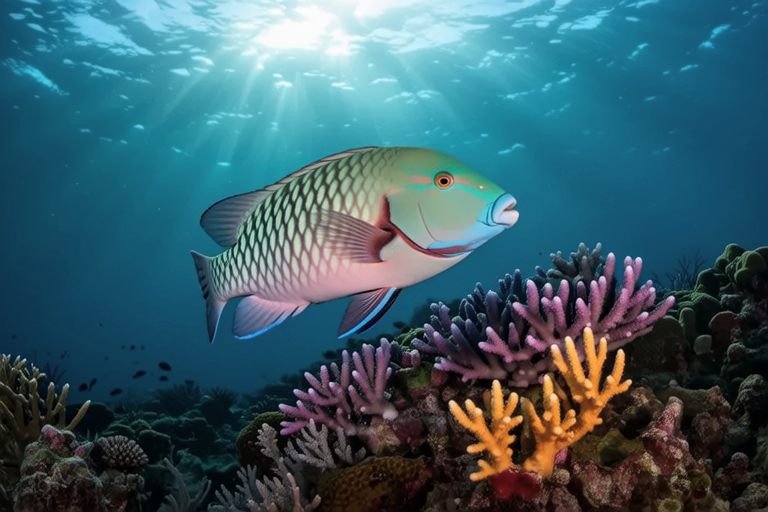
Parrot Fish: The Vibrant Underwater Colorists of Coral Reefs
In the vast and colorful world of marine life, few creatures can rival the dazzling array of hues found in parrot fish. These remarkable fish, belonging to the family Scaridae, are not only a sight to behold but also play a crucial role in the health and survival of coral reefs. With their striking colors and unique behaviors, parrot fish have earned their reputation as the vibrant underwater colorists of coral reefs.
The Importance of Parrot Fish in Coral Reef Ecosystems
Parrot fish are essential contributors to the delicate balance of coral reef ecosystems. Their bright colors, which range from electric blues and greens to fiery reds and oranges, make them stand out among other marine inhabitants. However, their significance extends far beyond aesthetics. Parrot fish are vital grazers that help maintain the health of coral reefs by feeding on algae that could otherwise overgrow and smother corals.
As these fish feed, they ingest large amounts of algae and coral rubble, which they then excrete as sand. This process, known as bioerosion, plays a critical role in shaping the physical structure of reefs and contributes to the formation of beaches. By preventing excessive algal growth, parrot fish indirectly benefit coral growth, allowing more sunlight to reach the photosynthetic organisms within the coral polyps.
Unique Sleeping Habits and Physical Characteristics
One of the most fascinating aspects of parrot fish is their unique sleeping habits. Before retiring for the night, these fish secrete a protective mucus cocoon around themselves. This slimy barrier acts as a deterrent to predators, protecting the fish while they rest. The exact composition of the mucus remains a subject of scientific curiosity, but it is believed to mask the fish’s scent, making it harder for nocturnal hunters to locate them.
Physically, parrot fish are characterized by their robust bodies, large scales, and powerful beaks used for grazing. Their teeth are fused into a parrot-like beak, which they use to scrape algae off rocks and coral. The beak’s strength allows them to consume tough algae, contributing significantly to their dietary needs and ecological role. Parrot fish are also known for their impressive size, with some species growing up to three feet long.
Vibrant Species and Behaviors
Several species of parrot fish are renowned for their vivid colors and distinct patterns. For instance, the Queen parrot fish (Scarus vetula) displays a striking palette of blue, green, and yellow, while the Midnight parrot fish (Scarus coelestinus) features a mesmerizing blend of purple and blue. The Bicolor parrot fish (Cetoscarus bicolor), with its contrasting black and orange body, is another species that captivates divers and snorkelers alike.
Parrot fish exhibit a variety of behaviors that contribute to their survival and reproduction. Many species change color and pattern as they mature, with juveniles often displaying different hues than adults. Some parrot fish are territorial, defending their feeding grounds against rivals, while others form schools for protection. Breeding behavior varies widely among species, with some laying thousands of eggs at once, ensuring the continuation of their populations.
Challenges and Conservation Efforts
Despite their importance to coral reef ecosystems, parrot fish face numerous challenges due to environmental changes and human activities. Overfishing, habitat destruction, and pollution pose significant threats to their populations. In many regions, parrot fish are targeted for their meat and vibrant colors, leading to declines in local populations. Additionally, climate change-induced coral bleaching events can reduce food sources for parrot fish, further jeopardizing their survival.
Conservation efforts are essential to protect parrot fish and the coral reefs they inhabit. Marine protected areas, sustainable fishing practices, and public awareness campaigns can all play a role in safeguarding these vibrant fish. By supporting initiatives that promote ocean conservation, we can help ensure the continued existence of parrot fish and the vibrant underwater worlds they call home.
In conclusion, parrot fish are not just beautiful additions to coral reefs; they are vital players in maintaining the health and diversity of these ecosystems. Their grazing habits, unique sleeping behaviors, and striking colors make them a captivating subject for both scientists and nature enthusiasts. As we face the challenges of preserving marine biodiversity, it is crucial to recognize the importance of parrot fish and work towards their conservation. By doing so, we can ensure that future generations will continue to marvel at the vibrant underwater colorists of coral reefs.
