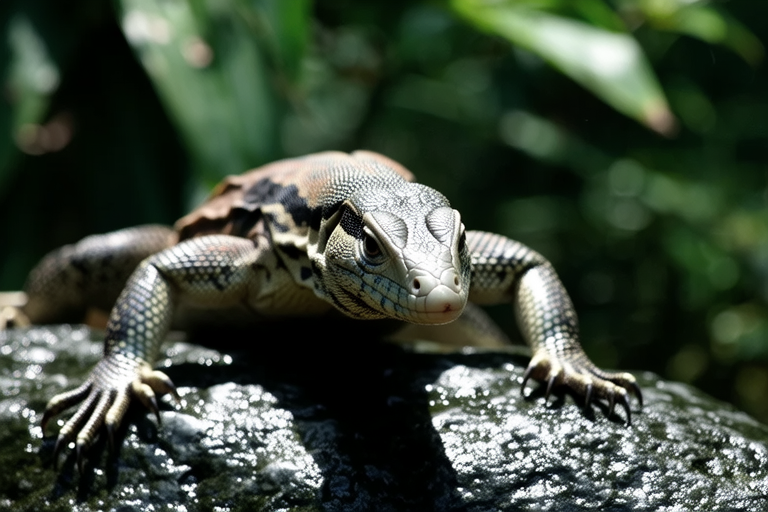
Breathtaking Behaviors: Inside the Life of a Captivating Water Monitor
In the vast tapestry of nature, few creatures embody the spirit of adaptability and resilience as poignantly as the water monitor (Varanus salvator). These reptilian marvels, native to Southeast Asia, are not only the largest lizards found outside Australia but also one of the most fascinating species on our planet. This article delves into the intricate details of their life, showcasing their remarkable behaviors, dietary habits, and their indispensable role within their ecosystems. We will also debunk common myths surrounding these captivating creatures.
The Agile Ambassadors of Wetlands
Water monitors are masters of both land and water, their bodies finely tuned for an amphibious lifestyle. With powerful limbs and sharp claws, they can swiftly navigate through dense vegetation, scale trees with ease, and dive into rivers and lakes to hunt. Their streamlined form allows them to swim gracefully, propelling themselves through aquatic environments with powerful strokes. Despite their formidable appearance, water monitors exhibit a surprising gentleness when interacting with their surroundings, making them true ambassadors of wetland ecosystems.
Habitat and Range
These lizards inhabit a diverse range of habitats, from mangrove swamps to freshwater marshes, rice paddies, and even urban areas. They are particularly fond of areas near water sources, which provide ample opportunities for hunting and basking. The water monitor’s adaptability has enabled it to thrive in regions such as India, Sri Lanka, Bangladesh, Myanmar, Thailand, Malaysia, Indonesia, and the Philippines. However, their habitat is under threat due to deforestation and human encroachment, making conservation efforts crucial for their survival.
Dietary Diversity
Water monitors are opportunistic feeders, consuming a wide variety of prey. Their diet primarily consists of fish, frogs, crabs, insects, birds, and small mammals. They have been known to scavenge on carrion, further highlighting their role as ecosystem engineers. Their keen sense of smell helps them locate food buried beneath the soil or hidden underwater. In addition, they possess powerful jaws and sharp teeth, enabling them to tackle larger prey items. Their feeding habits contribute significantly to maintaining ecological balance by controlling populations of certain species.
Behavioral Traits
Water monitors display several intriguing behaviors that set them apart from other reptiles. For instance, they engage in social interactions with each other, often seen basking together in groups. During mating season, males become more territorial, engaging in ritualized combat to establish dominance over potential mates. Females lay eggs in nests dug into sandy banks or termite mounds, ensuring optimal incubation conditions. Hatchlings emerge fully independent, equipped with all necessary skills to survive in their environment.
Agility and Hunting Techniques
One cannot discuss water monitors without mentioning their exceptional agility. Whether leaping through foliage or diving into murky waters, these lizards demonstrate remarkable dexterity. Their hunting techniques vary depending on the type of prey targeted. On land, they employ stealthy approaches, creeping up on unsuspecting victims before delivering a swift strike. In contrast, when pursuing aquatic prey, they rely on their ability to hold their breath for extended periods while tracking down elusive targets.
Myths and Misconceptions
Despite being revered in some cultures as symbols of strength and wisdom, water monitors have also been subject to numerous myths and misconceptions. One prevalent myth suggests that they pose significant danger to humans; however, this is largely unfounded. While capable of inflicting painful bites if threatened, water monitors generally avoid confrontation unless provoked. Another misconception involves their intelligence level – many believe they are exceptionally clever, but scientific evidence does not support this claim. Nonetheless, their complex behaviors certainly warrant admiration.
Role in Ecosystems
Water monitors play a vital role in maintaining healthy ecosystems by controlling pest populations and facilitating nutrient cycling. By preying upon rodents and insects, they help prevent crop damage and reduce disease transmission among animal communities. Additionally, their scavenging activities aid in breaking down organic matter, enriching soil quality and promoting plant growth. Thus, preserving water monitor populations benefits not only wildlife but also agricultural practices and overall environmental health.
Conservation Efforts
Recognizing the importance of water monitors in their respective ecosystems, various organizations worldwide are dedicated to protecting these magnificent creatures. Initiatives include habitat restoration projects aimed at reforesting degraded lands, establishing protected areas where monitors can live undisturbed, and raising awareness about the need for sustainable land-use practices. Education campaigns targeting local communities emphasize coexistence rather than fear-based attitudes towards these animals.
Conclusion
The water monitor stands as a testament to nature’s ingenuity and adaptability. From their agile movements across varied terrains to their crucial roles within ecosystems, these lizards captivate us with their beauty and complexity. As stewards of Earth’s biodiversity, it falls upon us to safeguard their future so future generations may continue to marvel at these breathtaking behaviors. Let us honor the water monitor not just as a fascinating creature but as an integral part of our shared natural heritage.
