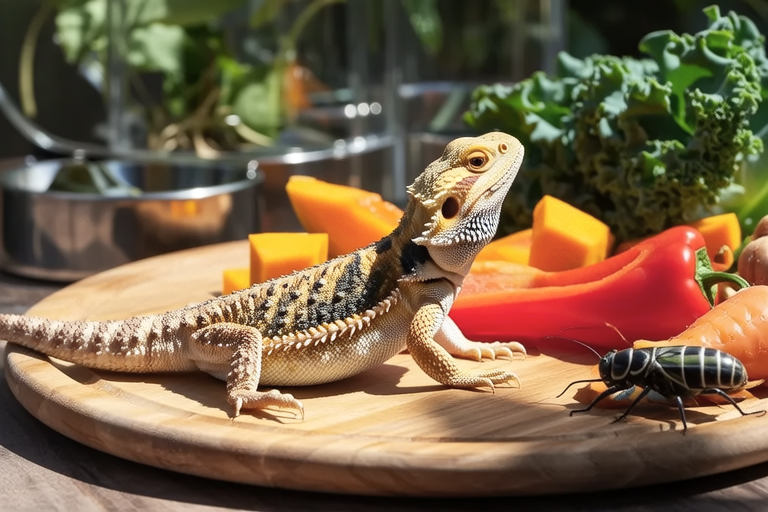
Feeding Your Bearded Dragon Like a Pro
Welcome to your comprehensive guide on how to feed your bearded dragon like a pro. This guide will cover everything from understanding the dietary needs of your pet to creating a balanced diet with appropriate vegetables and proteins. We’ll also discuss feeding schedules, hydration methods, and common mistakes to avoid.
Understanding Dietary Needs
Your bearded dragon’s diet must balance calcium, phosphorus, vitamins, and minerals to support its growth and overall health. Bearded dragons are omnivores, meaning they eat both plant-based foods (vegetables) and animal-based foods (insects). The ratio of these two types of food changes as your bearded dragon grows from a hatchling into an adult.
- Hatchlings: Younger bearded dragons require more protein than adults. Offer insects daily and supplement with finely chopped vegetables.
- Juveniles: Continue feeding insects but gradually increase the amount of vegetables. A good rule of thumb is to offer insects and vegetables in a 70:30 ratio.
- Adults: Adult bearded dragons need less protein. Their diet should consist of about 80% vegetables and 20% insects.
Always ensure that the food you provide is appropriately sized for your bearded dragon. Avoid overfeeding, which can lead to obesity and other health issues.
Selecting Appropriate Vegetables and Proteins
Vegetables
Bearded dragons enjoy a variety of vegetables, but not all are safe or nutritious. Here’s a list of recommended vegetables:
- Dark Leafy Greens: Kale, collard greens, mustard greens, dandelion greens, and escarole are excellent choices. They are rich in calcium and low in oxalates, which can bind calcium and prevent its absorption.
- Other Vegetables: Carrots, bell peppers, squash, and sweet potatoes are also beneficial. However, limit the intake of high-oxalate vegetables such as spinach, beet greens, and Swiss chard.
Ensure that all vegetables are fresh and thoroughly washed before feeding. Chop them into small pieces to make it easier for your bearded dragon to eat.
Insects
Bearded dragons enjoy various insects, but some are safer and more nutritious than others. Here’s what to include:
- Dubia Roaches: These are high in protein and low in fat, making them ideal for bearded dragons.
- Crickets: Another popular choice, but gut-load them with nutritious foods before feeding.
- Superworms: Good for occasional treats but should not be fed regularly due to their higher fat content.
Avoid feeding wild-caught insects, as they may carry parasites or pesticides. Always dust insects with a calcium powder before feeding, especially for younger dragons, to ensure they get enough calcium.
Feeding Schedules
The frequency of feeding depends on your bearded dragon’s age and activity level. Follow these general guidelines:
- Hatchlings: Feed hatchlings twice a day, offering as many insects as they can consume in 10-15 minutes.
- Juveniles: Feed juveniles once a day, reducing the number of insects as they grow older.
- Adults: Feed adults every other day, offering a mix of vegetables and insects.
Remember, overfeeding can lead to obesity and other health problems. Monitor your bearded dragon’s weight and adjust the quantity of food accordingly.
Hydration Methods
Bearded dragons obtain most of their water through the food they eat, but they also need access to fresh water. Here’s how to ensure your bearded dragon stays hydrated:
- Water Bowls: Provide a shallow water bowl large enough for your bearded dragon to soak in. Change the water daily to prevent bacterial growth.
- Misting: Mist your bearded dragon’s enclosure daily to create humidity. This encourages them to drink from the droplets formed on the glass or plants.
- Bathing: Bathe your bearded dragon weekly in lukewarm water. This helps them drink and can aid in shedding.
Always supervise your bearded dragon during bathing to prevent drowning.
Common Feeding Mistakes to Avoid
Feeding your bearded dragon incorrectly can lead to health problems. Here are some common mistakes to avoid:
- Overfeeding: This can lead to obesity and metabolic bone disease.
- Improper Hydration: Lack of water can cause dehydration, which can be fatal.
- Unsafe Insects: Feeding wild-caught insects or those that have been exposed to pesticides can harm your bearded dragon.
- Lack of Calcium: Insufficient calcium can lead to metabolic bone disease. Always dust insects with calcium powder.
By avoiding these mistakes and following the guidelines provided, you can ensure that your bearded dragon remains healthy and happy.
Conclusion
Feeding your bearded dragon properly is crucial for its health and well-being. By understanding its dietary needs, selecting appropriate vegetables and proteins, maintaining a consistent feeding schedule, and ensuring proper hydration, you can provide your bearded dragon with the best care possible. Remember to consult with a veterinarian if you have any concerns about your bearded dragon’s health or diet.
