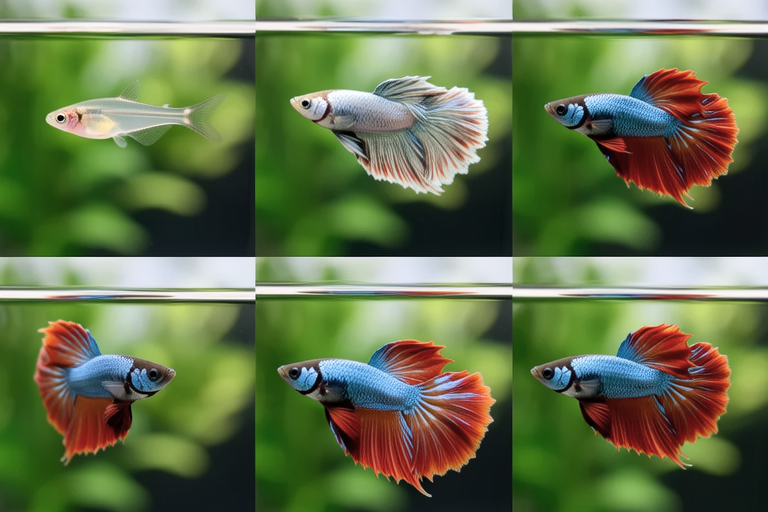
From Tiny Fry to Vibrant Adult: A Complete Timeline of Betta Growth Stages
Betta fish, also known as Siamese fighting fish, are captivating creatures that go through several distinct stages from fertilization to adulthood. This comprehensive guide will walk you through each phase, offering insights into their development, care requirements, and behavior.
Fertilization and Development Within the Egg
The journey of a betta fish begins at fertilization. Male bettas release sperm, while females produce eggs. In the wild, males build bubble nests to protect the eggs, but in captivity, breeding tanks are used to facilitate natural spawning. After fertilization, the eggs undergo rapid cell division, forming the embryo. Over the next few days, organs and structures develop, including eyes, fins, and a mouth. By the time they hatch, the tiny fry are ready to emerge into the world.
Hatching Process and Emergence of Fry
The hatching process typically occurs after three days. The yolk sac provides nourishment to the fry until they can swim freely. Once hatched, the fry are vulnerable and require specific conditions to thrive. They need a warm environment (around 80°F) and clean water to prevent infections. Initially, they remain near the surface, where they absorb oxygen from the water through their skin and gills.
Immediate Needs for Survival and Care Required During This Stage
During this stage, it’s crucial to maintain pristine water conditions. Frequent partial water changes help remove waste and ensure high oxygen levels. Betta fry are too small for most commercial fish foods; instead, they feed on infusoria, microscopic organisms found in aged aquarium water. As they grow, introduce finely ground flake food or specialized fry food. Regular observation ensures they are feeding properly and developing healthily.
Juvenile Phase: Physical Changes, Dietary Adjustments, and Social Behaviors
As fry grow into juveniles, significant physical changes occur. Their bodies elongate, fins develop, and colors begin to show. At this stage, bettas start eating larger, more varied foods like microworms and brine shrimp. Juveniles are curious and active, often exploring their surroundings. It’s essential to provide hiding spots and plants to reduce stress and promote exploration. Socially, they can be kept in groups if ample space is available; however, males should be separated early to prevent aggression.
Adolescent Period: Growth Patterns, Color Development, and Sexual Characteristics
During adolescence, bettas continue to grow rapidly. Males develop vibrant colors and extended fins, while females may show subtler hues. This is also when secondary sexual characteristics become apparent. Males develop longer dorsal and anal fins, while females have shorter, more rounded fins. Regular feeding with high-quality food supports robust growth and coloration. Water quality remains critical, requiring weekly water changes and monitoring of pH and temperature. Providing live plants or artificial ones encourages natural behaviors and reduces stress.
Adult Stage: Full Maturity, Typical Behaviors, and Optimal Living Conditions
Upon reaching adulthood, bettas exhibit their full potential. Males display striking colors and elaborate fins, while females show their unique beauty. Adults are territorial and can be aggressive towards other fish, especially males. They prefer solitude or company with non-aggressive species. An optimal tank size for an adult betta is at least five gallons, equipped with a filter, heater, and decorations to mimic their natural habitat. Maintaining stable water parameters—between 76-82°F and a pH of 6.5-7.5—is vital for their health.
Tips for Maintaining a Healthy Environment Throughout Each Stage
- Fry Stage: Maintain high oxygen levels, frequent water changes, and a diet of infusoria or specialized fry food.
- Juvenile Stage: Offer varied, nutritious foods and plenty of hiding spots. Monitor for signs of aggression.
- Adolescent Stage: Continue providing a balanced diet and ensure water quality. Separate males to prevent conflicts.
- Adult Stage: Provide ample space, appropriate tank mates, and consistent water conditions. Regular maintenance ensures longevity and happiness.
In conclusion, understanding the various stages of betta growth allows owners to provide the best possible care, ensuring these beautiful fish thrive. From delicate fry to vibrant adults, each phase requires attention to detail and commitment to their well-being.
