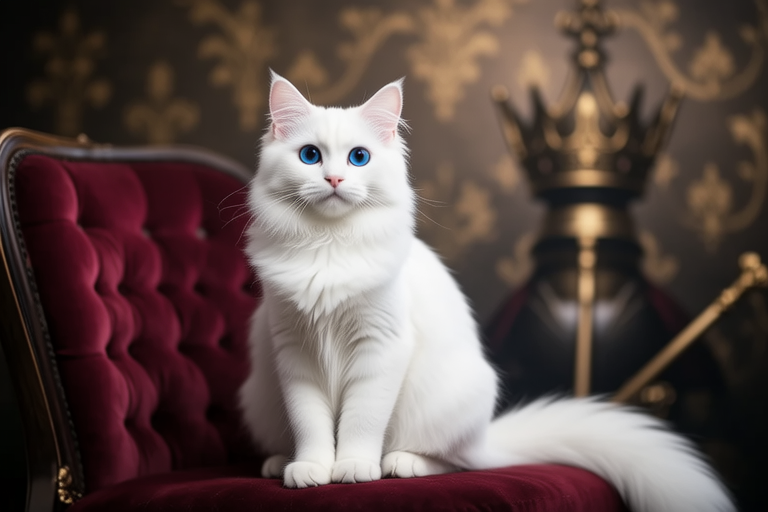
The Turkish Angora: A Feline Royal
The Turkish Angora, a breed steeped in history and revered for its elegance, has captivated the hearts of cat enthusiasts for centuries. This article delves into the origins, characteristics, and cultural significance of these majestic creatures, offering a comprehensive guide for both curious readers and prospective owners.
Origins in Ancient Turkey
The Turkish Angora traces its roots back to the heart of ancient Anatolia, where it has been cherished since time immemorial. Legends tell of these cats living in the wilds of central Turkey, with evidence suggesting their presence in the region as far back as the 16th century. Their name reflects their geographical origin, derived from Ankara (formerly known as Angora), a city renowned for its production of luxurious angora wool.
Historically, Turkish Angoras were often gifted to European monarchs and nobility, further cementing their status as symbols of luxury and prestige. The breed’s association with royalty dates back to the Ottoman Empire, where they were kept in harems and palaces. Today, their regal lineage continues to be celebrated in cat shows around the world.
Regal Appearance and Unique Coat Patterns
One glance at a Turkish Angora is enough to understand why they are considered crown jewels of feline royalty. These cats possess a slender, graceful build that exudes elegance. They have long, arched necks, large ears, and almond-shaped eyes that give them a striking, almost ethereal appearance. Their coats are silky and fine, often appearing to shimmer under light.
Perhaps most distinctive is their coat pattern. While many Turkish Angoras are white, the breed can also come in a variety of colors and markings, including black, blue, red, and cream. Among the most coveted are those with eye-catching patterns such as bi-color or tabby. Their coats are semi-longhaired, but notably, they do not require extensive grooming, which adds to their appeal.
Temperament and Personality
Turkish Angoras are known for their lively and affectionate nature. They form strong bonds with their human companions and are often described as loyal and playful. Despite their delicate appearance, these cats are quite active, enjoying games and interactive play. They are intelligent and curious, often engaging in exploration and problem-solving activities.
These traits make Turkish Angoras excellent companions for families who are willing to provide them with mental and physical stimulation. However, due to their high energy levels, they may not be ideal for households with young children or other pets unless proper introductions and supervision are provided.
Folklore and Modern Cat Shows
The Turkish Angora features prominently in the rich tapestry of Turkish folklore. According to legend, these cats were believed to possess magical powers, capable of warding off evil spirits and bringing good fortune to their homes. In some tales, they are even said to have the ability to communicate with humans through their eyes.
In modern times, the Turkish Angora continues to be celebrated in cat shows across the globe. Their striking appearance and regal demeanor make them popular contenders in various competitions. They are particularly admired for their agility and grace, qualities that are highlighted during showmanship events. Their participation in these shows serves to maintain the breed’s reputation as a symbol of elegance and refinement.
Care Requirements
Despite their glamorous appearance, Turkish Angoras are relatively low-maintenance when it comes to grooming. Their semi-longhair coats do not mat easily, so regular brushing once or twice a week is usually sufficient. However, during shedding seasons, more frequent brushing may be necessary to prevent hairballs and skin irritations.
Feeding a balanced diet tailored to their age, activity level, and overall health is crucial. High-quality cat food that meets their nutritional needs will help maintain their sleek coats and vibrant energy levels. Regular veterinary check-ups are essential to monitor their health and address any potential issues early on.
Notable Health Concerns
While generally healthy, Turkish Angoras can be prone to certain genetic conditions. One of the most common is Hypertrophic Cardiomyopathy (HCM), a type of heart disease that can affect the breed. Early detection through regular heart screenings is vital for managing this condition effectively.
Another concern is patellar luxation, a condition where the kneecap dislocates from its normal position. This can cause discomfort and mobility issues. Regular monitoring by a veterinarian can help identify and manage this condition.
Conclusion
The Turkish Angora stands as a testament to the enduring allure of feline royalty. From their origins in ancient Turkey to their starring roles in modern cat shows, these cats have captured the imagination of people worldwide. Their regal appearance, unique coat patterns, and affectionate personalities make them cherished companions. By understanding their care requirements and potential health concerns, prospective owners can ensure that these magnificent creatures continue to thrive in loving homes.
