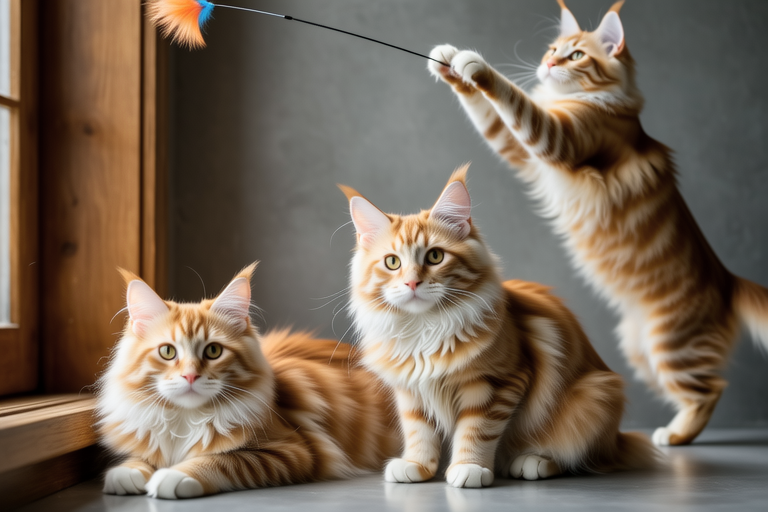
The Distinct Personalities of Orange Cats
Orange cats have long been admired for their striking appearance and distinctive personalities. These felines are often associated with warmth, playfulness, and loyalty. Their vibrant coats make them stand out in a crowd, but it is their unique behaviors and traits that truly set them apart. In this article, we will explore the distinct personalities of orange cats, focusing on their behavioral traits, historical perceptions, and scientific insights into why they exhibit certain temperaments.
Behavioral Traits of Orange Cats
Orange cats are known for their playful and social nature. They are often described as being more outgoing and friendly than other breeds, making them excellent companions for families with children or individuals looking for a lively pet. Their playful demeanor can be traced back to their hunting instincts, which make them highly active and curious creatures.
One of the most endearing traits of orange cats is their loyalty. They are known to form strong bonds with their owners and can be quite affectionate. Many owners report that their orange cats are always by their side, seeking attention and companionship. This loyalty can be attributed to their history as working cats, where they were often relied upon to keep rodents at bay. As a result, they developed a close relationship with humans, which has carried over into modern times.
While orange cats are generally friendly and sociable, they can also be independent and reserved. Some may take longer to warm up to new people or situations, preferring to observe from a distance before engaging. This independence is particularly noticeable in male orange cats, who are often more aloof and self-sufficient than their female counterparts.
Historical Perceptions of Orange Cats
The perception of orange cats throughout history has varied widely. In ancient Egypt, cats were revered as sacred animals, and orange cats were no exception. They were believed to possess magical powers and were often depicted in artwork and hieroglyphics. The ancient Egyptians even had a goddess named Bastet, who was often depicted as having the head of a cat and the body of a woman. She was associated with protection, fertility, and motherhood, and her image was often linked to the color orange.
In contrast, during the Middle Ages, cats, including orange cats, were often viewed with suspicion and fear. They were associated with witchcraft and were sometimes killed in large numbers during witch hunts. However, as time went on, attitudes toward cats began to change, and they became more accepted as household pets.
Today, orange cats are widely loved and admired for their charming personalities. They are often featured in popular culture, appearing in movies, books, and advertisements. Their popularity can be attributed to their friendly and sociable nature, as well as their striking appearance.
Scientific Insights into Orange Cat Temperaments
There are several scientific explanations for why orange cats exhibit certain temperaments. One theory suggests that the gene responsible for their orange coloring may also influence their behavior. A study published in the Journal of Feline Medicine and Surgery found that orange cats are more likely to be friendly and outgoing than other breeds. This could be due to the fact that the gene responsible for their orange coloring is also linked to higher levels of dopamine, a neurotransmitter associated with pleasure and reward.
Another theory suggests that the temperament of orange cats may be influenced by their environment. Cats that grow up in a nurturing and stimulating environment are more likely to be friendly and sociable, while those that grow up in isolation may be more reserved and independent. This could explain why some orange cats are more outgoing than others, even within the same litter.
Anecdotes and Studies Highlighting Orange Cat Personalities
There are many anecdotes and studies that highlight the unique personalities of orange cats. One such story comes from a family in New York City who adopted an orange cat named Charlie. Charlie quickly became the center of attention, known for his playful antics and affectionate nature. He would often follow his owners around the house, seeking attention and companionship. His loyalty was particularly noticeable during times of stress, when he would sit by his owner’s side, offering comfort and support.
A study conducted by researchers at the University of California, Davis, found that orange cats are more likely to engage in interactive play than other breeds. The study involved observing cats in a controlled environment, where they were presented with various toys and objects. The researchers found that orange cats were more likely to engage with the toys and objects, showing greater interest and curiosity. This playful nature makes them excellent companions for individuals looking for a lively pet.
Myths Surrounding Orange Cat Characters
There are several myths surrounding the character of orange cats. One common myth is that all orange cats are male. While it is true that male cats are more likely to have orange fur, female orange cats do exist. In fact, about 20% of female cats have orange fur. Another myth is that orange cats are more aggressive than other breeds. However, there is no scientific evidence to support this claim. In fact, studies have shown that orange cats are generally more friendly and sociable than other breeds.
Appearance and Human Interaction
The appearance of orange cats can have a significant impact on human interaction. Their vibrant coats make them stand out in a crowd, and many people are drawn to their striking appearance. However, it is important to remember that a cat’s appearance does not necessarily reflect its personality. Just like humans, cats come in all shapes, sizes, and colors, and each one is unique in its own way.
When interacting with an orange cat, it is important to approach them calmly and gently. Orange cats are generally friendly and sociable, but some may be more reserved and take longer to warm up to new people or situations. It is important to give them space and time to get comfortable in their surroundings.
Tips for Those Considering Adopting an Orange Cat
If you are considering adopting an orange cat, there are several things to keep in mind. First and foremost, it is important to choose a reputable breeder or shelter. Orange cats are generally healthy and hardy, but like all cats, they require proper care and attention. This includes regular veterinary check-ups, a nutritious diet, and plenty of love and attention.
Orange cats are known for their playful and sociable nature, so they are excellent companions for families with children or individuals looking for a lively pet. However, it is important to remember that each cat is unique, and their personality may vary depending on their upbringing and environment. It is important to spend time with the cat before adopting to ensure that it is a good fit for your lifestyle.
Finally, it is important to be prepared for the long-term commitment of owning a cat. Cats can live for 15 years or more, and they require regular care and attention throughout their lives. By providing your orange cat with a loving home, you will be rewarded with a loyal and affectionate companion for many years to come.
Conclusion
Orange cats are fascinating creatures, known for their striking appearance and unique personalities. Their playful and sociable nature, combined with their loyalty and affection, make them excellent companions for families and individuals alike. While there are many myths surrounding their character, scientific studies and anecdotal evidence suggest that orange cats are generally friendly and sociable, with a tendency towards interactive play. Whether you are considering adopting an orange cat or simply looking to learn more about these fascinating creatures, it is clear that they have much to offer as loyal and loving companions.
