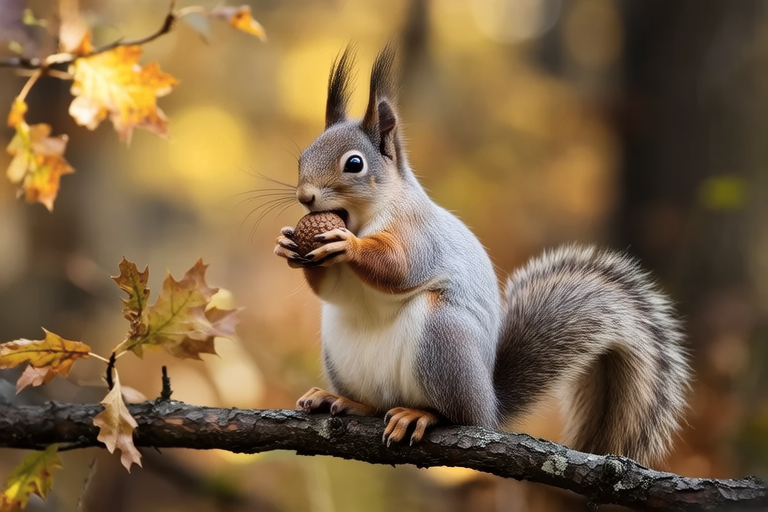
The Unsung Talents of Local Squirrels
When it comes to wildlife, few creatures are as ubiquitous and intriguing as squirrels. Known primarily for their playful antics and relentless pursuit of nuts, these small mammals possess a range of remarkable skills that are often overlooked by the casual observer. From their exceptional problem-solving abilities to their intricate social structures, squirrels are far more complex than meets the eye. This article delves into the unique talents of local squirrels, shedding light on their often-overlooked contributions to their environment.
Problem-Solving Prowess
Squirrels are renowned for their ability to navigate obstacles with ease, but their problem-solving capabilities extend far beyond mere navigation. In a series of experiments conducted at the University of Exeter, researchers found that squirrels can quickly adapt to new challenges, demonstrating an impressive level of intelligence. For instance, when faced with a transparent barrier between them and their food, squirrels were observed to use sticks or other objects to reach the desired prize. This ability to use tools is not only rare among small mammals but also suggests a high degree of cognitive flexibility.
In another study, squirrels were presented with a puzzle box containing a nut. The box had several layers, each requiring a different action to unlock. Over time, the squirrels learned to solve the puzzle efficiently, even when the configuration was changed. These findings indicate that squirrels have excellent learning abilities and can apply past experiences to new situations, making them adept at overcoming unexpected challenges.
Memory Techniques for Food Storage
One of the most fascinating aspects of squirrel behavior is their remarkable memory for food storage locations. Squirrels are scatter-hoarders, meaning they store food in numerous locations across their territory rather than in a single centralized cache. This strategy reduces the risk of losing all their provisions to predators or environmental factors. However, remembering the exact location of hundreds or even thousands of hidden nuts is no small feat.
Studies have shown that squirrels possess an extraordinary spatial memory. They can recall the location of cached nuts with remarkable accuracy, even months after burying them. This ability is crucial during the winter months when food sources are scarce. Squirrels employ various techniques to aid their memory, such as associating landmarks with specific caches or using scent markers to locate buried nuts. Their reliance on memory extends beyond just food storage; they also remember the locations of potential nesting sites and areas where they have encountered danger.
Research has also revealed that squirrels engage in deceptive behavior when caching food. To prevent other animals from stealing their stash, they sometimes perform “false caching,” where they pretend to bury a nut but do not actually deposit it. This tactic confuses potential thieves and increases the likelihood of the actual cache remaining undisturbed. Such strategic thinking underscores the complexity of squirrel cognition and highlights their ability to anticipate the actions of others.
Agility in Urban Environments
As cities expand, many species struggle to adapt to the changing landscape. However, squirrels have proven remarkably adept at thriving in urban environments. Their agility and adaptability allow them to navigate the concrete jungle with ease, utilizing man-made structures for shelter and food. In urban settings, squirrels have been observed scaling buildings, crossing power lines, and even using handrails as pathways.
Urban squirrels face numerous challenges, including traffic, predators, and limited natural resources. Despite these obstacles, they have developed innovative strategies to survive. For example, they have learned to exploit human-provided food sources, such as bird feeders and garbage cans. This adaptation has allowed them to thrive in areas where natural food sources might be scarce. Additionally, squirrels have been known to take advantage of artificial nesting sites, such as attics and chimneys, which provide protection from the elements and predators.
Observations in urban parks have shown that squirrels exhibit a high degree of social tolerance towards humans and other animals. They are often seen interacting with park-goers, sometimes accepting treats or engaging in playful behavior. This close proximity to humans has led to the development of unique social dynamics within urban squirrel populations. While some individuals may become habituated to human presence, others maintain a cautious distance, indicating a nuanced understanding of human behavior.
Social Behaviors
Contrary to popular belief, squirrels are not entirely solitary creatures. While they are often seen foraging alone, they do engage in complex social interactions that play a significant role in their survival. One of the most notable examples of squirrel social behavior is their use of vocalizations to communicate with one another. Squirrels produce a wide range of sounds, including chirps, barks, and alarm calls, each serving a specific purpose.
Alarm calls are perhaps the most well-known form of squirrel communication. When a predator is detected, squirrels emit a distinctive warning sound, alerting nearby individuals to the threat. This cooperative behavior increases the chances of survival for the entire group. Studies have shown that squirrels respond to the alarm calls of other species as well, indicating a level of interspecies cooperation. This cross-species communication demonstrates the importance of social bonds within the ecosystem.
Another aspect of squirrel social behavior is their territoriality. Male squirrels, in particular, are known to defend their territories vigorously, engaging in physical confrontations with intruders. However, these conflicts are often short-lived, and the dominant male usually emerges victorious. After establishing dominance, the male will patrol his territory, marking it with scent glands located near the tail. This behavior helps to deter other males from encroaching on his space while also signaling availability to potential mates.
Female squirrels also exhibit territorial behavior, particularly during the breeding season. They establish and defend nesting sites, ensuring that their young have a safe environment to grow. Female squirrels are known to form temporary alliances with other females, sharing resources and providing mutual support. This cooperative behavior enhances the chances of survival for both the mother and her offspring.
Surprising Roles in Local Ecosystems
Beyond their individual talents, squirrels play vital roles in maintaining the balance of local ecosystems. One of their most important functions is seed dispersal. As scatter-hoarders, squirrels inadvertently plant trees and shrubs throughout their territory. When they forget the location of a cached nut, it germinates, contributing to the growth of new vegetation. This process helps to regenerate forests and promotes biodiversity.
Squirrels also serve as prey for a variety of predators, including birds of prey, foxes, and snakes. Their abundance provides a stable food source for these animals, supporting the overall health of the ecosystem. In addition, squirrels contribute to soil fertility by burying and uncovering seeds, which aerates the soil and introduces nutrients. This activity promotes the growth of plants and contributes to the overall productivity of the ecosystem.
Furthermore, squirrels have been observed engaging in behaviors that benefit other species. For example, they have been seen removing ticks from birds, helping to reduce the spread of tick-borne diseases. This mutualistic relationship highlights the interconnectedness of the ecosystem and underscores the importance of each species’ role.
Conclusion
The talents of local squirrels extend far beyond their well-known antics. From their problem-solving abilities and memory techniques to their agility in urban environments and complex social behaviors, squirrels are far more than just entertaining creatures. Their contributions to local ecosystems are invaluable, and their adaptability ensures their continued success in both natural and urban settings. By recognizing and appreciating these talents, we gain a deeper understanding of the intricate web of life that surrounds us.
