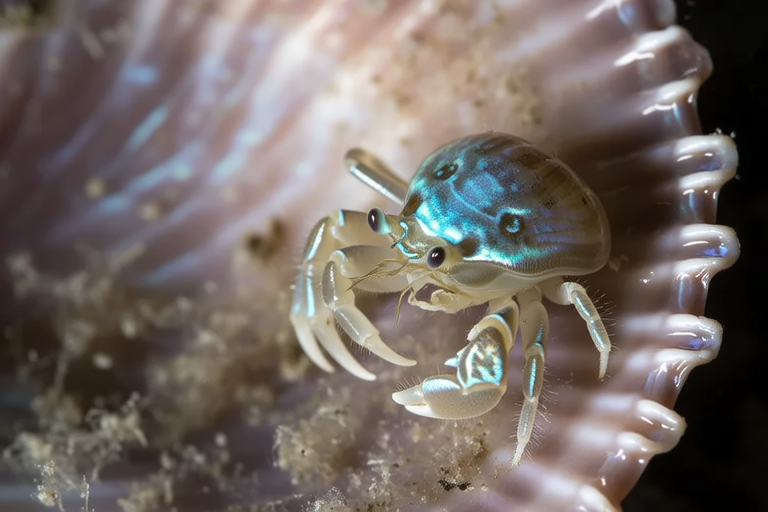
The Unique Relationship Between Pea Crabs and Their Mollusk Hosts
Pea crabs (Pinnotheridae) represent an extraordinary group of tiny crustaceans that have evolved to live within the bodies of bivalves and gastropods. These crustaceans inhabit the mantle cavity of their mollusk hosts, a space usually filled with water and used for respiration. Despite their small size, pea crabs have developed intricate relationships with their hosts, which allow them to survive and thrive without causing significant harm. This article delves into the symbiotic relationship between pea crabs and their mollusk hosts, exploring the benefits and adaptations that facilitate this coexistence, as well as the geographical distribution, life cycle, and specific examples of pea crab species known for this behavior. Additionally, it highlights the challenges researchers face when studying these hidden creatures and the ecological significance of their role within marine ecosystems.
Symbiotic Nature of the Relationship
The relationship between pea crabs and their mollusk hosts is best described as commensalism, where one species benefits while the other remains unaffected. Pea crabs gain protection from predators and a constant food supply, while their hosts generally remain unharmed. The crabs’ small size and flattened shape enable them to fit snugly within the host’s mantle cavity, where they can access nutrients from the host’s circulatory system and feed on detritus and microorganisms. In return, the presence of pea crabs does not significantly impact the host’s ability to filter feed or respire. Some studies suggest that the crabs may even help improve the host’s reproductive success by reducing the risk of parasitic infections.
Geographical Distribution and Specific Examples
Pea crabs are found worldwide in coastal waters, with species adapted to various environments, from tropical reefs to cold-temperate regions. One of the most well-known species, Portlandia arbutus, is commonly found in the Pacific Northwest, living within the shells of oysters and clams. Another example is Pinnixa fucata, which inhabits the gills of mussels along the Atlantic coast of North America. These species demonstrate remarkable adaptability, with some populations specializing in certain host species or habitats.
Life Cycle and Adaptations
The life cycle of pea crabs begins with free-swimming larvae that eventually settle on potential hosts. Once attached, the larvae undergo metamorphosis, transforming into the adult form that will reside within the host. Pea crabs exhibit several adaptations that enhance their survival within the confined space of the host’s mantle cavity. Their flattened bodies allow them to maneuver through tight spaces, while specialized appendages enable them to grasp onto the host’s tissues. Additionally, pea crabs have developed mechanisms to avoid triggering the host’s immune response, ensuring long-term cohabitation.
Challenges in Studying Pea Crabs
Researching pea crabs presents unique challenges due to their small size and hidden lifestyle. Observing their behavior directly is difficult, requiring advanced imaging techniques and careful dissection of host specimens. Moreover, understanding the interactions between pea crabs and their hosts often necessitates long-term field studies, which can be logistically challenging. Recent advancements in molecular biology and genetics have provided new tools for studying pea crabs, offering insights into their genetic diversity and evolutionary history.
Ecological Significance
The role of pea crabs within marine ecosystems extends beyond their direct interactions with hosts. As part of the larger food web, pea crabs contribute to nutrient cycling and energy flow. Their presence can influence the abundance and distribution of other organisms, including predators and competitors. Furthermore, pea crabs may serve as indicators of environmental health, reflecting changes in water quality or habitat availability. Understanding the ecological significance of pea crabs is crucial for developing effective conservation strategies and managing marine resources sustainably.
Recent Discoveries and Ongoing Research
Recent studies have shed new light on the complex interactions between pea crabs and their hosts. For instance, researchers have discovered that some species of pea crabs can influence the reproductive success of their hosts by reducing the prevalence of parasitic infections. Additionally, advances in genetic sequencing have revealed previously unknown species and highlighted the genetic diversity within pea crab populations. Ongoing research focuses on elucidating the mechanisms underlying the commensal relationship, as well as exploring the potential applications of pea crab biology in biotechnology and medicine.
Conclusion
The relationship between pea crabs and their mollusk hosts exemplifies the intricate and often surprising connections that exist within marine ecosystems. By living within the bodies of bivalves and gastropods, pea crabs have evolved to exploit a niche that offers protection and sustenance. This commensal relationship benefits both parties, allowing pea crabs to thrive without causing harm to their hosts. Despite the challenges associated with studying these hidden creatures, ongoing research continues to uncover new insights into the biology and ecology of pea crabs, highlighting their importance within marine ecosystems.
