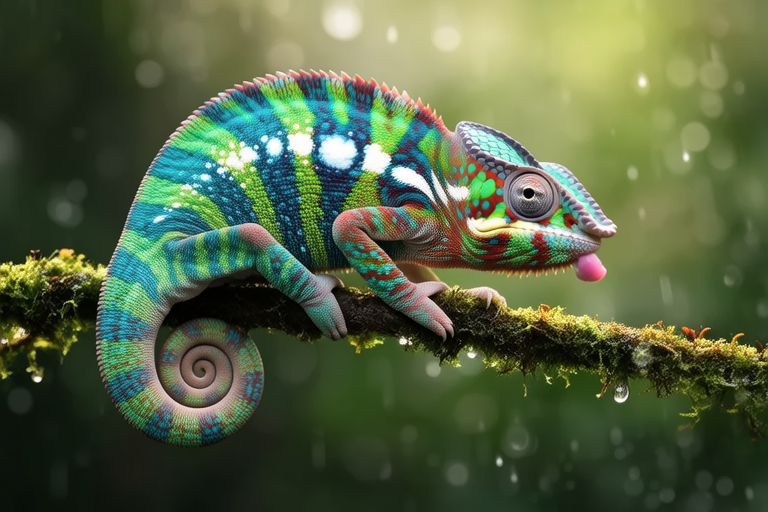
Chameleon Colors Explained: Unraveling the Mystery Behind Their Shifting Tones
Chameleons, those enchanting creatures from the reptile world, have long captured the imagination of people everywhere with their extraordinary ability to change colors. These small to medium-sized lizards are native to Africa and Madagascar, and their remarkable adaptation has made them a symbol of transformation and adaptability. Despite their popularity in popular culture, many aspects of their color-changing abilities remain shrouded in mystery.
Common Misconceptions About Chameleon Color Changes
One of the most widespread myths about chameleons is that they change color to blend in with their surroundings. While this may seem logical, it’s not entirely accurate. In reality, chameleons don’t shift hues to match their environment as a means of perfect camouflage. Instead, they alter their color for various reasons, primarily related to communication, temperature regulation, and emotional state. This misconception stems from the fact that chameleons can indeed change their appearance dramatically, but their primary purpose for doing so is much more complex than simply mimicking their background.
The Biological Mechanism: Chromatophores
The true marvel behind chameleon coloration lies in their specialized skin cells called chromatophores. These cells are layered beneath the chameleon’s transparent outer skin, each containing pigments of different colors. The top layer, known as iridophores, contains guanine crystals that reflect light, creating vibrant blues and greens. Below these lie xanthophores, which produce yellow hues, and erythrophores, responsible for reds and oranges. Beneath these layers are melanophores, which control darkening effects.
The process of changing color involves the expansion or contraction of these cells. When a chameleon wants to change its color, it sends signals through its nervous system to the chromatophores. These signals trigger the movement of pigments within the cells, causing them to either spread out or contract. This dynamic interplay of pigments and light reflection creates the dazzling array of colors that we see in chameleons.
Reasons for Color Changes: Communication and Temperature Regulation
Chameleons use their color-changing abilities primarily for communication. Males, especially during mating season, will display vivid colors to attract females or intimidate rivals. For instance, a male panther chameleon (Furcifer pardalis) might showcase a stunning palette of electric blues and bright yellows to signal its readiness to mate. Conversely, if another male enters the territory, it may display darker, more aggressive tones to ward off competition.
In addition to communication, chameleons also adjust their colors to regulate their body temperature. By expanding their iridophores and reflecting sunlight, they can cool down when temperatures rise. On cooler days, they may contract these cells to absorb more heat, warming their bodies efficiently. This thermoregulation is crucial for maintaining optimal metabolic rates, especially since chameleons are ectothermic animals, meaning they rely on external sources to maintain their body temperature.
Camouflage: A Secondary Role
While camouflage isn’t the primary reason for chameleon color changes, it does play a secondary role. Chameleons can blend in with their surroundings to some extent, making them less visible to predators. However, this adaptation is more effective against moving prey than stationary threats. For example, a chameleon resting on a green leaf may subtly shift its colors to better match the foliage, giving it a slight advantage in catching insects.
Examples of Different Species and Their Specific Abilities
Different species of chameleons exhibit unique color-changing abilities. The veiled chameleon (Chamaeleo calyptratus), for instance, can display an impressive range of colors, from deep browns to bright pinks. Meanwhile, the Jackson’s chameleon (Trioceros jacksonii) is known for its distinctive trident-shaped horns and its ability to flash bright reds and greens. Each species has evolved specific traits that enhance its survival in its particular habitat.
The Latest Research and Theories
Despite significant advancements in understanding chameleon coloration, several mysteries still surround this phenomenon. Recent studies have focused on the precise mechanisms that allow chameleons to achieve such rapid and intricate color changes. Researchers are exploring the role of nanocrystals within iridophores, which may contribute to the reflective properties that create intense blues and greens.
Moreover, ongoing investigations delve into the neurological pathways that control color shifts. Scientists are particularly interested in how environmental factors influence these processes, aiming to uncover the full spectrum of stimuli that trigger color changes. Future studies may reveal even more about the intricate balance between physiology and behavior in these fascinating creatures.
As we continue to unravel the mysteries of chameleon coloration, one thing remains certain: these lizards are a testament to the wonders of evolution and adaptation. Their ability to transform their appearance serves multiple purposes, from communication and thermoregulation to camouflage and stress management. Understanding these mechanisms not only enhances our appreciation of these incredible animals but also provides valuable insights into the broader field of biology.
In conclusion, chameleons are more than just masters of disguise; they are sophisticated communicators and efficient thermoregulators. Their color-changing abilities are a result of complex biological processes involving specialized cells and intricate neural signaling. As research progresses, we can look forward to further discoveries that deepen our understanding of these captivating creatures and their place in the natural world.
