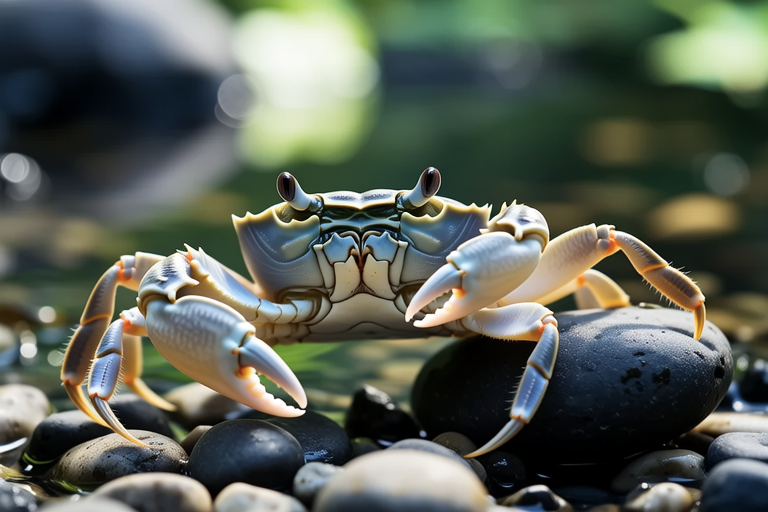
From Ocean Depths to Your Backyard Pond: The Journey of Pea Crabs
Introduction to Pea Crabs
Pea crabs, belonging to the family Pinnotheridae, are tiny crustaceans that have captivated the attention of marine biologists for decades. These diminutive creatures typically range from 3 to 8 millimeters in length, making them among the smallest crabs in the world. Their petite size belies their significant role in marine ecosystems. What makes pea crabs particularly fascinating is their unique habitat: they live exclusively inside marine bivalves, such as oysters, mussels, and clams. This symbiotic relationship is one of the most remarkable examples of coexistence in nature.
The Unique Habitat of Pea Crabs
Pea crabs have evolved to thrive within the protective confines of their bivalve hosts. They enter the mantle cavity of their host through small openings or during the early stages of the bivalve’s development. Once inside, pea crabs benefit from the safety and nourishment provided by their host. In return, while they do not directly feed on their host, their presence can influence the host’s behavior and health, sometimes leading to enhanced filtration rates and increased water flow around the bivalve. This interaction is crucial for maintaining the delicate balance within marine ecosystems.
The Role of Pea Crabs in Ocean Ecosystems
In the vast oceanic realm, pea crabs play a vital role through their symbiotic relationships. They are part of complex food webs where energy flows between different organisms. For instance, pea crabs contribute to nutrient cycling by consuming detritus and microorganisms found within the bivalve’s environment. Additionally, their presence can affect the reproductive success of their hosts, indirectly influencing population dynamics within the ecosystem. This intricate web of interactions highlights the importance of pea crabs in maintaining biodiversity.
Transition to Backyard Ponds
The journey of pea crabs from the ocean depths to backyard ponds is often driven by human activities. One primary factor is the aquarium trade, where these crabs may be inadvertently introduced along with other marine species. Another significant contributor is accidental releases, such as when aquaculture facilities discharge water containing non-native species into nearby bodies of water. As a result, pea crabs can find themselves in freshwater environments like backyard ponds, far from their natural habitats.
Adaptation Challenges in New Environments
Once in freshwater environments, pea crabs face numerous challenges adapting to their new surroundings. Unlike their marine counterparts, freshwater conditions present different salinity levels, temperature fluctuations, and food sources. The bivalves that serve as hosts in freshwater environments might also differ from those in the ocean, potentially affecting the symbiotic relationship. Despite these challenges, some pea crab populations have shown remarkable resilience, successfully establishing themselves in these new habitats.
Potential Impact on Local Pond Ecosystems
The introduction of pea crabs into backyard ponds can have both positive and negative impacts on local ecosystems. On one hand, their presence can enhance nutrient cycling and promote biodiversity. However, there is also a risk of disrupting existing food chains and outcompeting native species for resources. Understanding these potential impacts is crucial for managing aquatic ecosystems effectively and ensuring the preservation of native species.
Conservation Efforts and Ecological Balance
Efforts to conserve pea crabs and their ecosystems are essential for maintaining ecological balance. Conservationists focus on monitoring the distribution and population dynamics of pea crabs in various environments. By studying these factors, scientists can better understand the mechanisms behind successful adaptation and devise strategies to mitigate any adverse effects on local ecosystems. Education plays a pivotal role in this effort, raising awareness about the importance of these tiny creatures and encouraging responsible practices in the aquarium trade and aquaculture.
Conclusion
The journey of pea crabs from the ocean depths to your backyard pond is a testament to the interconnectedness of our planet’s ecosystems. These small yet significant creatures offer valuable insights into the complexity of symbiotic relationships and the adaptability of life. Understanding their journey is not only scientifically intriguing but also vital for preserving ecological balance. As we continue to explore and protect our natural world, recognizing the role of pea crabs in both marine and freshwater environments will undoubtedly enrich our appreciation for the intricate web of life on Earth.
