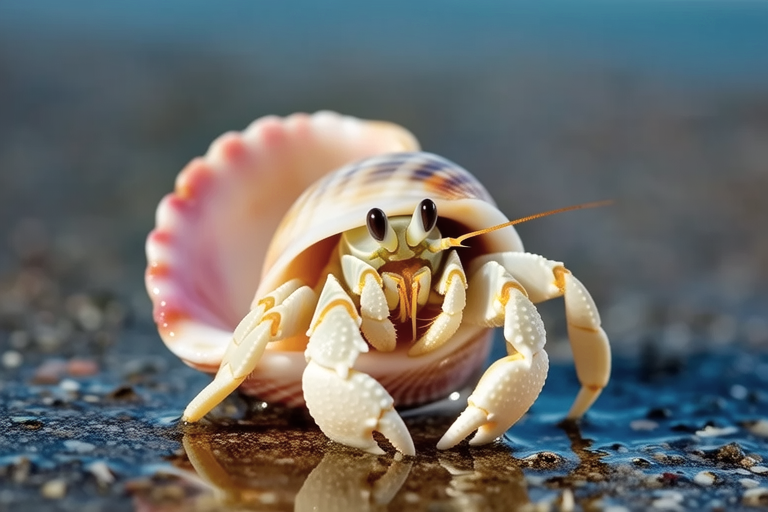
Pea Crabs: Nature’s Cozy Symbiosis Between Shell and Host
In the vast and diverse world of marine life, there exists a unique and fascinating relationship between pea crabs and their hosts. Pea crabs, scientifically known as Pinnotheridae, are small crustaceans that live in the mantle cavities of bivalves such as clams and oysters, or within the bodies of barnacles. This article explores the intriguing lives of pea crabs, their symbiotic relationship with their hosts, and their significant role in marine ecosystems.
Defining Pea Crabs
Pea crabs are small, translucent crabs named for their resemblance to green peas. They belong to the family Pinnotheridae and are found in various oceans around the globe. These crabs are typically less than an inch in size, making them one of the smallest crab species. Their small stature and translucent appearance make them well-suited for their lifestyle within the protective confines of their hosts.
The Unique Relationship with Their Hosts
The relationship between pea crabs and their hosts is a classic example of mutualism, where both parties benefit from each other. Pea crabs find protection and shelter within the shells of their hosts, while their hosts receive a form of pest control. The crabs feed on the parasites and detritus that would otherwise harm their hosts, thus enhancing the overall health of the host organism.
Evolutionary Advantages of the Symbiotic Relationship
This symbiotic relationship has several evolutionary advantages for both the pea crabs and their hosts. For pea crabs, living within a shell provides protection from predators and harsh environmental conditions. Additionally, the stable environment within the host’s body cavity allows them to focus more energy on reproduction rather than survival. For the host, the presence of pea crabs can lead to improved health and longevity due to reduced parasitic loads and cleaner living conditions.
Physical Characteristics of Pea Crabs
Pea crabs have several physical adaptations that enable them to thrive in their symbiotic environment. Their flattened bodies allow them to fit snugly within the mantle cavities of their hosts, while their translucent exoskeletons provide camouflage against potential predators. The crabs possess long, slender legs adapted for swimming and navigating within the host’s body cavity. Their claws are relatively small but effective for capturing food and defending themselves.
Lifecycle of Pea Crabs
The lifecycle of pea crabs is closely tied to their hosts. Female pea crabs enter the host during the juvenile stage and remain there until they reach sexual maturity. Mating occurs within the host, and the female then releases her eggs into the water. Once hatched, the larvae drift in the ocean currents before finding a suitable host to settle in. This process ensures the continuation of the symbiotic relationship across generations.
Adaptations to Living Within Host Shells
To survive within their hosts, pea crabs have developed remarkable adaptations. Their flattened bodies allow them to maneuver efficiently within confined spaces, while their translucent exoskeletons help them blend in with their surroundings. Additionally, pea crabs have evolved to be highly efficient at extracting nutrients from their environment, including dissolved organic matter and detritus. This efficiency allows them to thrive even in environments where food resources may be limited.
Challenges and Threats Faced by Pea Crabs
Despite their successful adaptation to their symbiotic lifestyle, pea crabs face several challenges and threats in their natural habitats. One major threat is habitat destruction caused by human activities such as coastal development and pollution. These factors can disrupt the delicate balance of marine ecosystems, potentially leading to a decline in the availability of suitable hosts for pea crabs. Additionally, climate change poses a significant risk to pea crabs and their hosts, as changes in water temperature and acidity can affect the health and distribution of both organisms.
Ecological Significance of Pea Crabs
Pea crabs play a crucial role in maintaining marine biodiversity. By controlling parasite populations and improving the health of their hosts, they contribute to the overall stability of marine ecosystems. Furthermore, pea crabs serve as a food source for larger predators, thereby contributing to the food chain. Their presence also indicates the health of their hosts and the broader ecosystem, making them valuable indicators of environmental conditions.
Conclusion
Pea crabs exemplify the beauty and complexity of nature’s symbiotic relationships. Through their unique partnership with their hosts, these tiny crustaceans have found a way to thrive in challenging environments. Understanding the intricate details of their lives and the benefits they bring to their ecosystems highlights the importance of preserving marine biodiversity. As we continue to explore and appreciate the wonders of the ocean, it is essential to recognize and protect the delicate balance that sustains these fascinating creatures.
