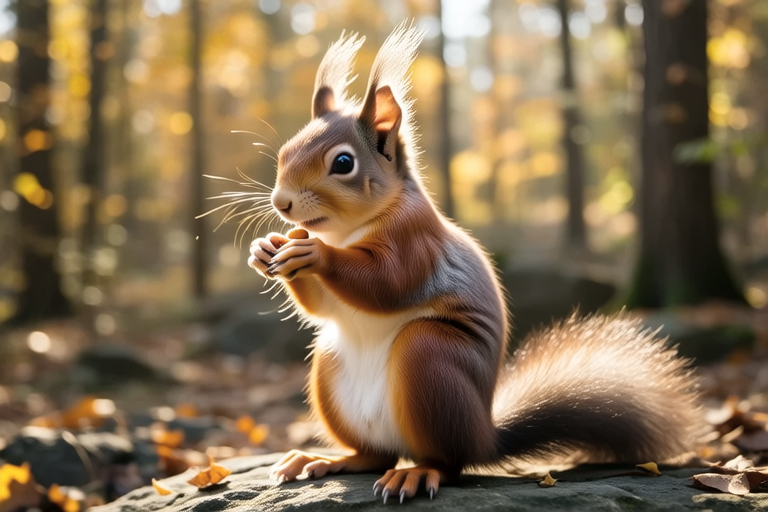
Adventures with Almond-Lovers: A Day in the Life of a Squirrel
In the heart of a bustling city park, nestled among the roots of a towering oak tree, lives a family of energetic and curious squirrels. Each morning, as the first rays of sunlight pierce through the dense canopy, these creatures emerge from their cozy dens to embark on another exciting day. Their world is a blend of urban and natural landscapes, teeming with opportunities and challenges.
The Habitat: A Perfect Blend of Nature and Concrete
The squirrels’ habitat is a fascinating mix of trees, shrubs, and the occasional concrete jungle. The park, their primary domain, offers a rich array of flora, including oaks, maples, and various nut-bearing trees. These trees are not only vital for providing shelter but also serve as larders for the squirrels, especially during autumn when the ground is carpeted with fallen nuts.
The squirrels’ homes, called dreys, are intricately constructed nests made from twigs, leaves, and moss. They are typically located high up in the branches, offering protection from ground-dwelling predators and harsh weather conditions. Despite the comfort of their homes, the squirrels are always on the move, exploring their environment and seeking out new sources of food.
A Morning Feast: Foraging for Nuts
The day begins with a flurry of activity as the squirrels set out to forage for breakfast. Their diet primarily consists of nuts, seeds, fruits, and occasionally insects. Among their favorites are almonds, which they relish for their rich flavor and nutritional value. The squirrels have a keen sense of smell and can detect ripe nuts from a considerable distance.
As they scamper along the branches, the squirrels use their sharp claws to climb trees with remarkable agility. They pause at each potential food source, sniffing and nibbling before deciding whether to harvest or pass. This process is not just about sustenance; it’s a dance of survival, where every bite could mean the difference between life and death.
Once a promising nut is found, the squirrel uses its teeth to crack open the shell, revealing the delicious almond inside. The process is both precise and efficient, showcasing the animal’s adaptation to its environment. The squirrel then either eats the almond immediately or stores it away for later use, a behavior known as caching.
Caching: The Art of Storing Food
Caching is one of the most fascinating behaviors of squirrels. It involves burying nuts and seeds in various locations throughout their territory, creating hidden stashes for leaner times. This practice is crucial for survival, especially during winter when food sources are scarce.
To cache a nut, the squirrel first selects a suitable location, often under a leaf pile or within a crevice in the bark. Using its front paws, the squirrel digs a small hole, places the nut inside, and covers it with soil or leaves. The process is repeated several times throughout the day, ensuring that the squirrel has a reliable food supply.
Remarkably, despite burying thousands of nuts over time, squirrels have an impressive ability to remember the locations of their caches. This memory is enhanced by the presence of a specific protein in their brains, which helps them recall the exact spots even after months have passed. However, some nuts are forgotten, contributing to the natural regeneration of trees in the area.
Navigating Human Environments: Challenges and Opportunities
Life in the park isn’t without its challenges. The squirrels must navigate human environments, where dangers lurk in unexpected places. Cars, dogs, and people pose significant threats, requiring constant vigilance. The squirrels have adapted to these risks by becoming adept at crossing roads and avoiding pets. They’ve learned to recognize the signs of danger and respond quickly, often darting across streets at the last moment.
Despite these risks, human environments offer unique opportunities. Feeders filled with peanuts and birdseed provide additional food sources, supplementing the squirrels’ natural diet. These feeders are a source of excitement and competition, with squirrels vying for position and dominance. The interaction with humans also brings moments of joy and curiosity, as the squirrels watch people from a safe distance.
However, not all human interventions are beneficial. Some individuals leave out food that is harmful to the squirrels, such as bread or sugary snacks. These offerings can lead to health problems and disrupt the squirrels’ natural foraging habits. It’s important for park-goers to understand the impact of their actions and to provide nutritious alternatives like unsalted nuts.
Avoiding Predators: A Game of Survival
Predation is a constant threat in the squirrels’ world. Birds of prey, such as hawks and owls, pose significant danger, especially when the squirrels are out in the open. To avoid becoming a meal, the squirrels rely on their speed, agility, and keen senses. They have developed an acute awareness of their surroundings, often pausing mid-forage to scan the skies for any sign of danger.
When threatened, the squirrels employ a variety of defensive tactics. They may freeze in place, blending into their surroundings, or they might flee at top speed, zigzagging through the trees to confuse their pursuers. In some cases, the squirrels will emit a warning call, alerting others to the presence of a predator. This communal alarm system helps protect the entire group from harm.
The squirrels’ ability to adapt and survive in the face of these challenges is a testament to their resilience. Their strategies for avoiding predators and securing food are finely tuned, allowing them to thrive in environments that would be inhospitable to many other species.
The Social Structure: Family and Community
Squirrels are highly social animals, living in close-knit families and communities. Within their groups, there is a clear hierarchy, with dominant males leading the way. These leaders are responsible for defending the group’s territory and ensuring the safety of their kin. Females, on the other hand, are primarily focused on raising their young, teaching them essential survival skills.
The bond between mother and offspring is particularly strong. Baby squirrels, or kits, are born blind and helpless, relying entirely on their mothers for care and protection. Over the course of several weeks, the kits grow and develop, learning how to climb, forage, and avoid danger. By the time they reach adulthood, they are well-prepared to face the challenges of the world.
Interactions within the group are often playful and affectionate, with squirrels grooming each other and sharing food. These social bonds strengthen the community, making it more resilient in the face of adversity. The squirrels’ ability to work together and support one another is key to their success.
The Cycle of Seasons: Adapting to Change
The passage of seasons brings about significant changes in the squirrels’ lives. Spring is a time of renewal, with new growth and abundant food sources. Summer is a period of peak activity, marked by intense foraging and caching. Autumn sees the squirrels preparing for winter, stockpiling nuts and seeds for the colder months ahead. Winter, though challenging, is a time of rest and conservation.
During the colder months, the squirrels rely heavily on their stored food and the insulation provided by their dens. They may also huddle together for warmth, sharing body heat to stay comfortable. Despite the harsh conditions, the squirrels remain active, venturing out periodically to replenish their supplies.
The cycle of seasons is a reminder of the squirrels’ deep connection to nature and their ability to adapt to changing circumstances. Their daily routines and behaviors are finely tuned to the rhythms of the natural world, ensuring their survival and prosperity.
Conclusion: Celebrating the Charm of Squirrels
A day in the life of a squirrel is a testament to the wonder and complexity of the natural world. From their intricate foraging behaviors to their clever caching techniques, these small creatures display remarkable intelligence and adaptability. Their interactions with almonds and other nuts are just one part of a larger story, one that highlights their role in maintaining ecological balance.
As we observe the squirrels in their daily adventures, we are reminded of the importance of respecting and protecting wildlife. Their presence enriches our parks and neighborhoods, bringing a touch of wildness and charm to our everyday lives. By understanding and appreciating the squirrels’ behaviors and challenges, we can better coexist with these delightful creatures, ensuring that future generations can enjoy their antics and wisdom.
