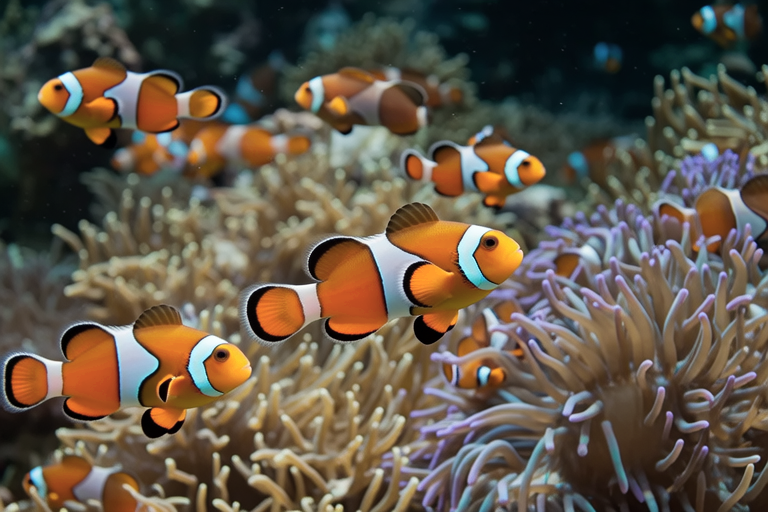
Top 10 Clownfish Species Perfect for Saltwater Aquariums
Clownfish, also known as anemonefish, have long been a favorite among saltwater aquarium enthusiasts. Their vibrant colors, playful personalities, and relative ease of care make them an ideal choice for both beginners and seasoned aquarists. These fish are often associated with the iconic symbiotic relationship they share with sea anemones, but many species can thrive without one. This article will guide you through the top 10 clownfish species that are perfect for saltwater aquariums, offering detailed descriptions, care tips, and advice on choosing the best species for your tank.
1. Ocellaris Clownfish (Amphiprion ocellaris)
The Ocellaris Clownfish, or the False Percula Clownfish, is one of the most popular and widely recognized species. It boasts a bright orange body with three white bands, black outlines, and a striking white tail. Adults can grow up to 3 inches in length. This species is known for its hardiness and adaptability, making it an excellent choice for beginners.
Care Tips: Maintain a pH between 8.1 and 8.4, a specific gravity of 1.020 to 1.025, and a temperature range of 76 to 82 degrees Fahrenheit. A tank size of at least 20 gallons is recommended. Ocellaris Clownfish are generally peaceful and can coexist with other non-aggressive fish. They are omnivores and should be fed a varied diet consisting of flakes, pellets, and occasional live or frozen foods like brine shrimp.
2. Percula Clownfish (Amphiprion percula)
The Percula Clownfish is another common species, closely resembling the Ocellaris Clownfish but slightly smaller. It features a deep orange color with white stripes outlined in black. Adults typically reach about 2.5 inches in length. This species is more sensitive than the Ocellaris, requiring more stable water parameters.
Care Tips: Keep the pH between 8.1 and 8.4, the specific gravity at 1.020 to 1.025, and the temperature within the range of 76 to 82 degrees Fahrenheit. A minimum tank size of 30 gallons is advised. Percula Clownfish are compatible with other non-aggressive species and should be fed a similar diet to the Ocellaris Clownfish.
3. Tomato Clownfish (Amphiprion frenatus)
The Tomato Clownfish is easily identified by its deep red coloration and white tail. Adults can grow up to 4.5 inches in length. This species is known for its aggressive behavior towards other clownfish but is otherwise peaceful with other tank mates. Tomato Clownfish are larger and more resilient than some other species, making them suitable for larger tanks.
Care Tips: Maintain a pH of 8.1 to 8.4, a specific gravity of 1.020 to 1.025, and a temperature range of 76 to 82 degrees Fahrenheit. A tank size of at least 30 gallons is necessary. Tomato Clownfish are territorial and may bully other clownfish, so choose tankmates carefully. Provide a varied diet of flakes, pellets, and live or frozen foods.
4. Maroon Clownfish (Premnas biaculeatus)
The Maroon Clownfish is the largest of all clownfish species, reaching lengths of up to 5 inches. It has a dark brown body with a white stripe running from its snout to its tail. This species is highly territorial and can become aggressive towards other clownfish. Despite its size and temperament, the Maroon Clownfish is a popular choice due to its striking appearance.
Care Tips: Keep the pH between 8.1 and 8.4, the specific gravity at 1.020 to 1.025, and the temperature within the range of 76 to 82 degrees Fahrenheit. A tank size of at least 55 gallons is recommended. The Maroon Clownfish is territorial and should be housed alone or with large, non-aggressive fish. Feed a varied diet of flakes, pellets, and live or frozen foods.
5. Skunk Clownfish (Amphiprion akallopisos)
The Skunk Clownfish is recognizable by its white stripe that runs along its back from head to tail. Adults can grow up to 3 inches in length. This species is less aggressive than some others and can coexist peacefully with other clownfish. Skunk Clownfish are relatively easy to care for and are a good choice for intermediate aquarists.
Care Tips: Maintain a pH between 8.1 and 8.4, a specific gravity of 1.020 to 1.025, and a temperature range of 76 to 82 degrees Fahrenheit. A tank size of at least 30 gallons is advised. Skunk Clownfish are compatible with other non-aggressive species and should be fed a varied diet of flakes, pellets, and live or frozen foods.
6. Saddleback Clownfish (Amphiprion polymnus)
The Saddleback Clownfish is characterized by its brownish-orange body with a prominent white saddle marking behind its dorsal fin. Adults can grow up to 4 inches in length. This species is known for its relatively calm demeanor and is a good choice for beginners.
Care Tips: Keep the pH between 8.1 and 8.4, the specific gravity at 1.020 to 1.025, and the temperature within the range of 76 to 82 degrees Fahrenheit. A tank size of at least 30 gallons is recommended. Saddleback Clownfish are compatible with other non-aggressive species and should be fed a varied diet of flakes, pellets, and live or frozen foods.
7. Clarkii Clownfish (Amphiprion clarkii)
The Clarkii Clownfish is one of the most variable in color and pattern, ranging from yellow to dark brown with white stripes. Adults can grow up to 4 inches in length. This species is known for its adaptability and resilience, making it a good choice for beginners.
Care Tips: Maintain a pH between 8.1 and 8.4, a specific gravity of 1.020 to 1.025, and a temperature range of 76 to 82 degrees Fahrenheit. A tank size of at least 30 gallons is advised. Clarkii Clownfish are compatible with other non-aggressive species and should be fed a varied diet of flakes, pellets, and live or frozen foods.
8. Pink Skunk Clownfish (Amphiprion perideraion)
The Pink Skunk Clownfish is easily identified by its pink body and a white stripe that runs along its back. Adults can grow up to 3 inches in length. This species is less aggressive than some other clownfish and can coexist peacefully with other clownfish. Pink Skunk Clownfish are relatively easy to care for and are a good choice for intermediate aquarists.
Care Tips: Keep the pH between 8.1 and 8.4, the specific gravity at 1.020 to 1.025, and the temperature within the range of 76 to 82 degrees Fahrenheit. A tank size of at least 30 gallons is recommended. Pink Skunk Clownfish are compatible with other non-aggressive species and should be fed a varied diet of flakes, pellets, and live or frozen foods.
9. Orange Skunk Clownfish (Amphiprion sandaracinos)
The Orange Skunk Clownfish is distinguished by its orange body and a white stripe that runs along its back. Adults can grow up to 3 inches in length. This species is less aggressive than some other clownfish and can coexist peacefully with other clownfish. Orange Skunk Clownfish are relatively easy to care for and are a good choice for intermediate aquarists.
Care Tips: Maintain a pH between 8.1 and 8.4, a specific gravity of 1.020 to 1.025, and a temperature range of 76 to 82 degrees Fahrenheit. A tank size of at least 30 gallons is advised. Orange Skunk Clownfish are compatible with other non-aggressive species and should be fed a varied diet of flakes, pellets, and live or frozen foods.
10. Sebae Clownfish (Amphiprion sebae)
The Sebae Clownfish is one of the larger species, growing up to 4 inches in length. It has a brownish-orange body with white stripes. This species is known for its adaptability and resilience, making it a good choice for beginners.
Care Tips: Keep the pH between 8.1 and 8.4, the specific gravity at 1.020 to 1.025, and the temperature within the range of 76 to 82 degrees Fahrenheit. A tank size of at least 30 gallons is recommended. Sebae Clownfish are compatible with other non-aggressive species and should be fed a varied diet of flakes, pellets, and live or frozen foods.
Selecting the Best Clownfish Species for Your Tank
Choosing the right clownfish species depends on your tank setup and personal preferences. If you’re a beginner, consider starting with a hardy species like the Ocellaris Clownfish or the Saddleback Clownfish. Intermediate aquarists might prefer the Skunk Clownfish or the Clarkii Clownfish. Experienced aquarists could handle the more challenging species like the Maroon Clownfish or the Sebae Clownfish.
When selecting clownfish, also consider the size of your tank and the compatibility of potential tankmates. Larger species like the Tomato Clownfish and the Maroon Clownfish require more space and may need to be housed alone or with large, non-aggressive fish. Smaller species like the Ocellaris Clownfish and the Percula Clownfish can coexist peacefully with other small fish.
Ultimately, the best clownfish species for your tank is one that fits well with your current setup and meets your care capabilities. By understanding the unique traits and care requirements of each species, you can create a thriving and beautiful saltwater aquarium environment.
