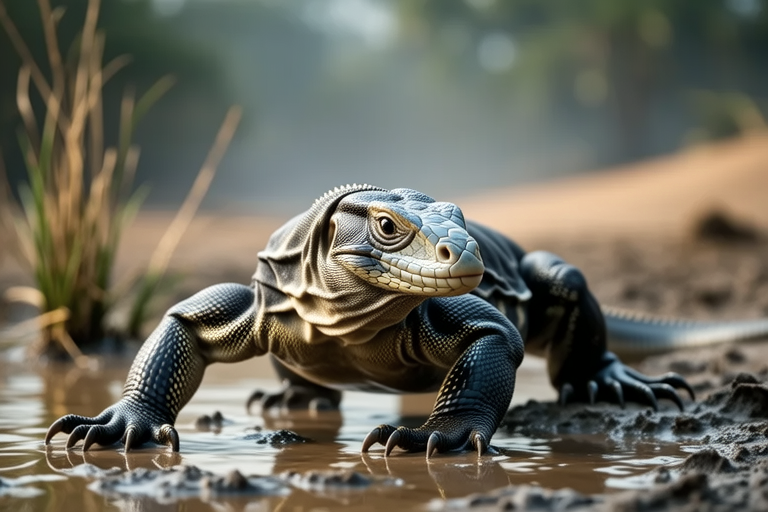
From Swamp to Sandbox: A Journey into the Life of a Water Monitor
The water monitor (Varanus salvator), one of the largest lizards in the world, is a remarkable creature that has captured the fascination of nature enthusiasts and scientists alike. Known for its agility and adaptability, the water monitor thrives in the dense, humid swamps and wetlands of Southeast Asia. This article delves into the life of this magnificent reptile, exploring its physical attributes, dietary habits, and survival strategies. We will also examine how water monitors navigate urban environments, often referred to as ‘sandboxes,’ and discuss the challenges and opportunities presented by such changes.
Natural Habitat and Physical Characteristics
The water monitor’s natural habitat spans across mangrove forests, riverbanks, and freshwater marshes from India to Indonesia. These environments provide ample cover and food sources, essential for the survival of these predators. The water monitor boasts an impressive array of physical features that enable it to thrive in its aquatic and terrestrial surroundings. Adults can reach lengths of up to 3 meters, with males typically being larger than females. Their powerful limbs, equipped with sharp claws, allow them to dig burrows and climb trees with ease. The tail, which constitutes about two-thirds of their total length, serves multiple purposes. It aids in swimming, balance, and can be used as a formidable weapon against threats.
The lizard’s skin is covered in scales, providing protection against scratches and abrasions. The coloration varies among individuals, ranging from olive green to brownish-black, often with yellow or cream-colored markings. This camouflage helps them blend seamlessly into their surroundings, making it easier to hunt prey and avoid predators. Their keen eyesight and excellent sense of smell further enhance their hunting capabilities, enabling them to detect even the slightest movement or scent of potential meals.
Diet and Unique Adaptations
Water monitors are opportunistic feeders, meaning they consume whatever food is available in their environment. Their diet primarily consists of fish, crabs, insects, small mammals, birds, and eggs. They have strong jaws and sharp teeth, perfect for crushing shells and tearing flesh. In addition to their robust physical attributes, water monitors possess several unique adaptations that aid in their survival. For instance, their nostrils are positioned high on their snouts, allowing them to breathe while partially submerged. This adaptation is particularly useful for stalking prey underwater or escaping from threats.
Another fascinating adaptation is their ability to enter a state of brumation during colder months. Unlike hibernation, which involves complete dormancy, brumation allows the lizard to remain active but at a reduced metabolic rate. This enables them to conserve energy and survive in cooler temperatures. Additionally, water monitors can store fat reserves in their tails, providing sustenance during periods of food scarcity.
Transitioning to Urban Environments
As human populations expand, many species find themselves adapting to urban environments. Water monitors are no exception. Over time, some populations have moved closer to cities and towns, creating new habitats within the concrete jungles we call ‘sandboxes.’ These urban areas offer various advantages, including access to food waste, artificial shelters, and fewer natural predators. However, this transition also brings its own set of challenges.
In urban settings, water monitors often become scavengers, feeding on discarded food and garbage. While this provides a reliable food source, it can lead to nutritional imbalances and health issues if their diet becomes too reliant on human refuse. Moreover, these lizards face increased risks of injury from vehicles, entanglement in fences, and conflicts with other animals over resources.
Despite these challenges, there are instances where water monitors and humans coexist peacefully. Some communities have embraced these reptiles as beneficial inhabitants, appreciating their role in controlling rodent populations. Educational programs aimed at fostering respect and understanding between humans and water monitors have also been successful in reducing negative interactions.
Behavioral Changes and Challenges
The shift from swamps to sandboxes has prompted significant behavioral modifications in water monitors. In their natural habitats, they tend to be more solitary, with males defending territories and females seeking out secluded nesting sites. However, in urban environments, social dynamics change. Males may establish overlapping territories near food sources, leading to increased competition for mates and resources. Females might nest in communal areas, taking advantage of man-made structures like drainpipes or abandoned buildings.
One notable challenge faced by water monitors in urban settings is exposure to pollutants. Chemicals present in wastewater runoff and industrial effluents can accumulate in their bodies, potentially causing long-term health problems. Additionally, climate change poses another threat, altering rainfall patterns and affecting the availability of freshwater sources crucial for their survival.
Reflection and Conservation Efforts
Understanding the life of water monitors in both their natural and altered habitats is vital for effective conservation efforts. By studying these adaptable creatures, researchers gain valuable insights into the broader implications of environmental changes on wildlife. Preserving wetlands and promoting sustainable urban planning practices can help ensure the continued existence of water monitors and countless other species.
Education plays a key role in fostering appreciation for these remarkable animals and encouraging responsible coexistence. Through community outreach programs, schools, and media campaigns, people can learn about the importance of protecting water monitors and their ecosystems. By supporting conservation initiatives and advocating for policies that safeguard biodiversity, we contribute to a future where both swamps and sandboxes remain vibrant homes for these incredible creatures.
