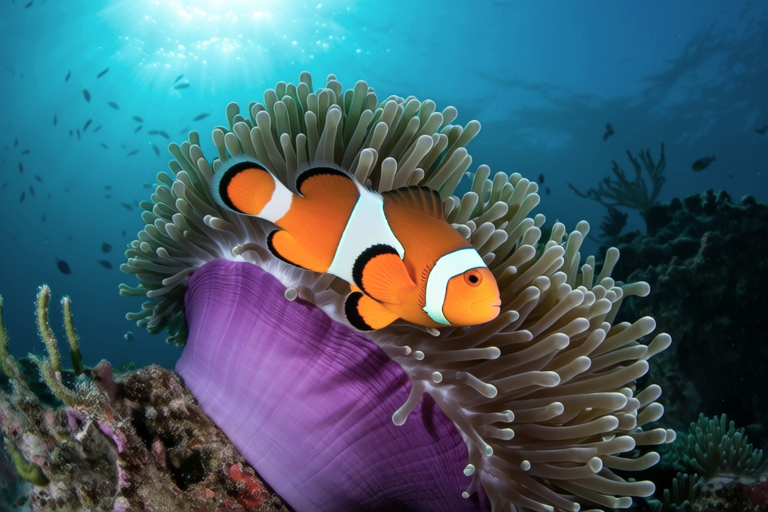
Clownfish and Anemones: Discovering the Unique Symbiotic Relationship
The ocean is a vast and mysterious world, full of fascinating creatures that have adapted to their environment in remarkable ways. One such example is the symbiotic relationship between clownfish and sea anemones. This relationship is one of the most well-known and visually striking in marine biology, and it serves as a prime example of how two species can thrive together in a mutually beneficial arrangement. In this article, we will explore the intricate dynamics of this relationship, focusing on the mutual benefits each species derives from the other.
The Mutual Benefits of Clownfish and Anemones
At first glance, the relationship between clownfish and anemones appears to be one-sided, with the clownfish seemingly benefiting more from the partnership. However, upon closer inspection, it becomes clear that both species benefit greatly from this unique relationship. Clownfish provide protection for their host anemones, while anemones offer shelter and food to the clownfish. The interdependence of these two species is a testament to the complexity and beauty of nature.
Protection Against Predators
One of the primary benefits that clownfish offer to their anemone hosts is protection against predators. Sea anemones are sessile organisms, meaning they are fixed in place and cannot move around to escape threats. They rely on their stinging cells, known as nematocysts, to defend themselves against potential predators. However, these defenses are not always enough to deter larger, more aggressive predators like butterfly fish or triggerfish. This is where the clownfish come in.
Clownfish have developed a unique behavior that helps protect their anemone homes. They swim in and out of the anemone’s tentacles, creating a visual and physical deterrent to any would-be predators. Their constant presence near the anemone also helps to confuse and distract potential threats. Additionally, some species of clownfish have been observed to actively chase away predators that venture too close to their anemone. This behavior not only protects the anemone but also ensures the safety of the clownfish and their offspring.
Shelter and Food Provision
While clownfish protect their anemone hosts, the anemones provide vital shelter and food for the clownfish. Anemones are equipped with venomous tentacles that can deliver a painful sting to most marine life. However, clownfish have evolved a special adaptation that allows them to live among these tentacles without being harmed. This adaptation is crucial for the survival of the clownfish, as it enables them to take full advantage of the protection and resources offered by the anemone.
The anemone provides a safe haven for the clownfish, protecting them from larger predators that might otherwise pose a threat. In return, the clownfish help to aerate the water around the anemone, which improves its ability to photosynthesize and produce energy. Additionally, clownfish feed on small particles of food that drift into the anemone’s tentacles, as well as on parasites that might otherwise harm the anemone. By removing these parasites, the clownfish help to keep their host healthy and thriving.
Chemical Adaptations of Clownfish
The ability of clownfish to live among anemones without being harmed is one of the most fascinating aspects of this symbiotic relationship. While the exact mechanism behind this adaptation is still not fully understood, researchers believe that it involves a combination of chemical and behavioral factors.
Studies have shown that clownfish secrete a mucus layer on their skin that may help to neutralize the effects of the anemone’s stinging cells. This mucus layer is thought to be chemically distinct from that of other fish, which explains why other species are unable to live among anemones without being stung. Additionally, clownfish have been observed to gently touch the anemone’s tentacles before settling in, possibly allowing them to acclimate to the anemone’s venom over time.
Behavioral adaptations also play a role in the clownfish’s ability to coexist with anemones. Clownfish have been observed to spend extended periods of time among the anemone’s tentacles, gradually becoming accustomed to the venom. This gradual exposure may help to build up a tolerance to the anemone’s sting, further enhancing the clownfish’s ability to live safely within the anemone.
Ecological Significance of the Symbiosis
The symbiotic relationship between clownfish and anemones is not only important for the survival of these two species but also plays a significant role in the overall health and stability of coral reef ecosystems. Coral reefs are some of the most biodiverse ecosystems on the planet, and they provide habitat and resources for countless species of marine life. The clownfish-anemone relationship is just one of many examples of how different species interact and depend on one another within these complex ecosystems.
By protecting their anemone hosts from predators and helping to keep them healthy, clownfish contribute to the overall stability of the reef ecosystem. Healthy anemones, in turn, provide shelter and food for clownfish and their offspring, ensuring the continued survival of these colorful fish. Additionally, the presence of clownfish in anemones can attract other species of fish and invertebrates, further enriching the biodiversity of the reef.
The clownfish-anemone relationship also serves as a reminder of the delicate balance that exists within marine ecosystems. Any disruption to this balance, whether through environmental changes or human activities, can have far-reaching consequences for the health and survival of these ecosystems. As such, it is essential to continue studying and understanding these relationships in order to better protect and conserve our oceans and the incredible diversity of life they support.
Conclusion
The symbiotic relationship between clownfish and anemones is a beautiful example of how two species can thrive together in a mutually beneficial arrangement. Through their protection of anemones from predators and the provision of shelter and food for clownfish, both species are able to survive and flourish in their shared environment. The chemical adaptations of clownfish that allow them to live among anemones without being harmed further highlight the complexity and wonder of nature. Finally, the ecological significance of this relationship underscores the importance of protecting and conserving marine ecosystems for future generations to enjoy.
