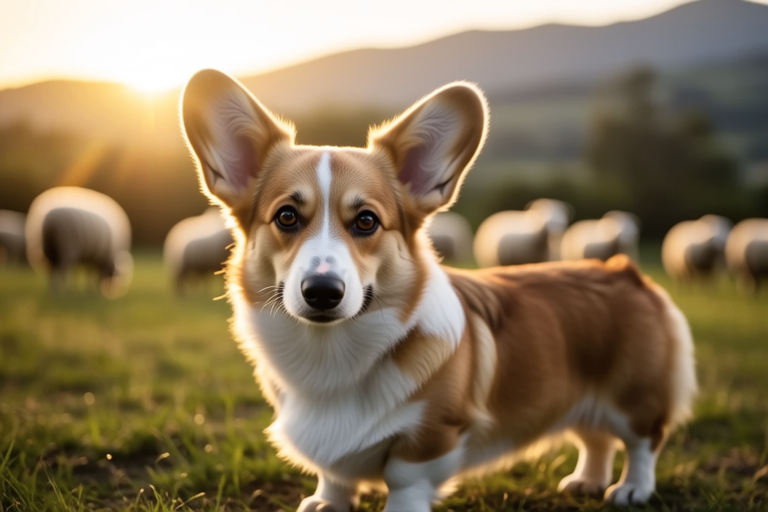
From Herding Dogs to Internet Stars: The Amazing Journey of the Corgi
With their stubby legs, perky ears, and comically waddling gait, corgis have captured hearts across continents—transforming from humble farmhands into global celebrities. Their compact bodies, often mistaken for a cross between a fox and a teddy bear, give them an instantly recognizable charm. But beyond their adorable appearance lies a rich history, remarkable intelligence, and an enduring legacy that spans centuries and cultures. From the rolling hills of Wales to the royal palaces of England and now the endless scroll of social media feeds, the corgi’s journey is nothing short of extraordinary.
The Roots of a Remarkable Breed: Wales and the Working Corgi
Long before corgis were chasing viral fame online, they were essential partners in rural Welsh life. Originating in the 10th century, these dogs are believed to have descended from Scandinavian herding breeds brought to Britain by Viking settlers. Over time, they evolved into two distinct types: the Pembroke Welsh Corgi and the Cardigan Welsh Corgi. While both share the breed’s iconic low-slung frame and alert expression, it’s the Pembroke—the more commonly recognized variety—that has taken the world by storm.
Historically, corgis weren’t just pets; they were vital workers. Standing only about 10 to 12 inches tall at the shoulder, their short stature was no disadvantage—it allowed them to dart beneath cattle and sheep with ease, nipping at heels to guide livestock without causing harm. “They’re built like a Swiss Army knife,” says Dr. Elsie Morgan, a canine historian and lecturer at Cardiff University. “Their agility, endurance, and sharp instincts made them perfect for herding on steep, rocky terrain where larger dogs would struggle.”
In Welsh farming communities, corgis were revered not just for their utility but also for their loyalty and intelligence. They formed deep bonds with their human handlers, responding quickly to commands and adapting to complex tasks. These traits were not accidental—they were carefully selected over generations. “The corgi isn’t just smart; it’s cunning,” adds Morgan. “It learns to anticipate movements, read body language, and even understand subtle cues. That’s why they could manage entire flocks with minimal direction.”
Intelligence, Energy, and Loyalty: The Traits That Define a Corgi
What makes corgis so special isn’t just their looks—it’s their mind. Ranked among the most intelligent dog breeds by Stanley Coren in his seminal work *The Intelligence of Dogs*, corgis consistently rank in the top 20. They can learn new commands in fewer than five repetitions and obey the first command 95% of the time. This mental sharpness, combined with high energy levels, made them ideal for demanding herding work—and later, excellent companions for active families.
Yet, their energy is not mere restlessness. It’s purposeful. A corgi’s enthusiasm stems from an innate desire to be useful. Whether it’s herding, retrieving, or simply following its owner around the house, this breed thrives when engaged. “Corgis don’t just want to be loved—they want to contribute,” explains veterinarian Dr. Lila Chen, author of *Canine Minds: Understanding the Modern Dog*. “If they’re not given a task, they’ll create one. That’s why you see them ‘herding’ children, chasing shadows, or dragging blankets across the floor.”
Loyalty is another hallmark. Corgis form deep emotional attachments and will follow their owners with unwavering devotion. They are known to bark at strangers but remain deeply affectionate with family members. This blend of protectiveness and warmth makes them exceptional guard dogs and devoted companions—ideal for homes seeking both activity and intimacy.
The Royal Connection: How Queen Elizabeth II Elevated the Corgi’s Status
While corgis had long been beloved in Wales, their leap into international fame began with one woman: Queen Elizabeth II. In 1940, shortly after her coronation, she received her first corgi, Susan, as a gift from her father, King George VI. What started as a personal pet soon became a defining feature of the royal household.
Over the decades, the Queen adopted more than 30 corgis—some born from breeding programs, others gifted by dignitaries. Each dog had a name beginning with the letter “D” (a nod to her husband, Prince Philip, whose middle name was David), such as Dookie, Dancer, and finally, the last surviving royal corgi, Willow. “She didn’t just own corgis—she lived with them,” says historian Michael Tuck, author of *The Royal Canine Chronicles*. “They were part of her daily routine, accompanying her on walks, sitting beside her during state visits, even joining her on royal trips.”
The Queen’s deep affection for her corgis wasn’t merely sentimental—it was symbolic. In a time of austerity and war, these small, cheerful dogs represented resilience, joy, and continuity. Their presence offered a rare glimpse into the private life of a monarch who rarely showed emotion in public. Photos of the Queen laughing with her corgis, walking through the grounds of Balmoral or Windsor Castle, became iconic. As Tuck notes, “The corgi became a visual metaphor for British perseverance—small in size, mighty in spirit.”
Even after her passing in 2022, the royal corgi legacy endures. The Queen’s final will ensured that her corgis would be cared for by her family, and her affection for them continues to inspire admiration worldwide. “She proved that a dog doesn’t need to be large to leave a lasting impact,” says Dr. Morgan. “In many ways, the corgi became a national symbol—not because of its pedigree, but because of its connection to the Queen.”
The Digital Revolution: Corgis Go Viral
If the royal endorsement launched the corgi into the spotlight, the internet cemented its status as a global phenomenon. In the early 2010s, as platforms like YouTube, Instagram, and TikTok exploded in popularity, corgis emerged as unexpected stars.
One of the earliest viral sensations was “Peanut the Corgi,” a dog whose goofy expressions and dramatic head tilts went viral in 2012. His videos, featuring him staring intensely at the camera or looking bewildered after being startled, amassed millions of views. Soon, other corgi accounts followed—like @corgi_dog_boy and @the_corgi_project—each showcasing the breed’s unique personality through humor, cuteness, and sheer unpredictability.
But it wasn’t just the videos. Memes, merchandise, and even fashion lines capitalized on the corgi craze. People began dressing their dogs in tiny hats, creating corgi-themed coffee mugs, and launching crowdfunding campaigns for corgi plushies. One popular meme format features a corgi photo with the caption “This is what I look like when I’m trying to ignore my owner.”
Experts suggest the corgi’s success online stems from a psychological phenomenon known as “cuteness overload.” According to Dr. Chen, “The corgi’s face—large eyes, rounded head, short muzzle—triggers a primal response in humans. It activates the same brain regions associated with nurturing infants. Plus, their exaggerated behaviors, like spinning in circles or dramatically flopping down, amplify this effect.”
Social media also celebrates the corgi’s quirks. Their tendency to “zoomies”—sudden bursts of frenetic energy—become instant entertainment. Their ability to appear simultaneously serious and absurd, like a dog wearing a tiny crown while staring judgmentally at a plate of food, resonates with audiences seeking lighthearted relief in stressful times.
“We’ve seen corgis participate in charity livestreams, star in commercial ads, and even become brand ambassadors,” says digital culture analyst Sarah Lin. “They’re not just pets anymore—they’re influencers. And unlike many trends, the corgi wave shows no sign of fading.”
Legacy in Balance: Tradition Meets Modern Adoration
As the corgi navigates the modern world—from royal estates to smartphone screens—it remains rooted in its heritage. Breeding standards still emphasize health, temperament, and working ability. Organizations like the Kennel Club in the UK continue to promote responsible ownership, warning against the dangers of overbreeding and the pressures of internet fame.
Yet, the breed’s transformation reflects a broader cultural shift. Today’s corgi is both a working animal and a beloved companion—a testament to adaptability and enduring appeal. “There’s something profoundly human about the corgi,” reflects Dr. Morgan. “It’s small enough to fit in our arms, yet strong enough to stand its ground. It’s playful enough to make us laugh, yet wise enough to comfort us in silence. That duality—between function and affection—is what makes it timeless.”
For many, adopting a corgi is more than a lifestyle choice; it’s a statement. It speaks to a desire for authenticity, joy, and connection in an increasingly digital world. Whether it’s the quiet moment of a corgi resting on a lap, the joyful bark at the doorbell, or the hilarious video that brightens a bad day, these dogs remind us of simple pleasures.
A Tiny Giant Among Dogs
The corgi’s journey—from Welsh pastures to royal courts to viral feeds—is a story of resilience, intelligence, and heart. Its rise to fame wasn’t due to luck alone, but to a combination of historical significance, innate brilliance, and a knack for capturing the human imagination. Through the lens of royalty and the glow of a smartphone screen, we see the same dog: loyal, clever, and endlessly expressive.
As long as there are people who appreciate wit, wonder, and whimsy, the corgi will continue to thrive—not just as a pet, but as a symbol. Small in stature, yes—but mighty in spirit, unforgettable in presence, and forever beloved.
So next time you see a corgi trotting by—or scrolling through a video of one doing backflips on a couch—pause. Take a moment to appreciate not just the cuteness, but the legacy. Behind every wagging tail and squinty-eyed stare lies centuries of tradition, dedication, and love. And perhaps, just perhaps, a little bit of magic.
