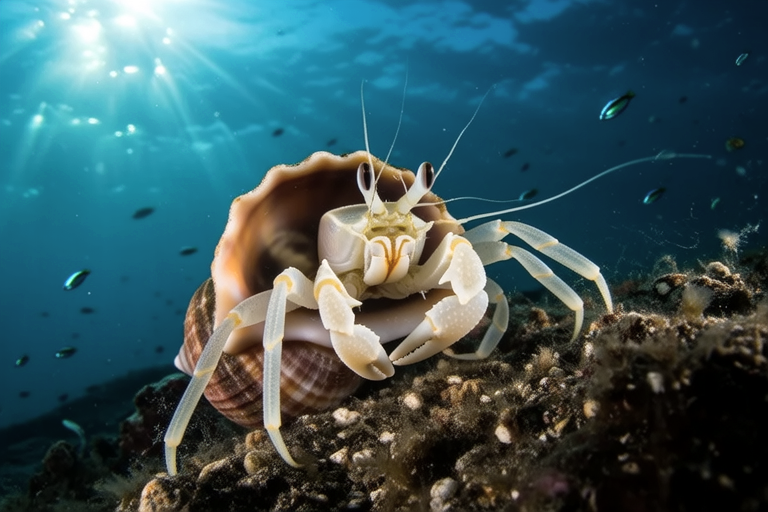
The Unique Lifecycle and Symbiotic Relationships of Pea Crabs
Pea crabs (Pinnotheres) are tiny crustaceans that live in the bodies of other marine animals, such as mussels and sea cucumbers. Their fascinating life cycle and symbiotic relationships make them one of the most interesting creatures in the ocean. This article will explore their habitat, lifecycle, symbiotic relationships, role in marine ecosystems, survival challenges, and impact on fisheries and human diet culture.
Habitat: A Hidden World Within Marine Creatures
Pea crabs are small, measuring only about 5 to 15 millimeters in length. They are often found living inside bivalves (mollusks with two shells), such as mussels, oysters, and scallops, or inside sea cucumbers. These crabs have adapted to living in these enclosed environments, where they can find protection from predators and a steady supply of food.
In mussels, pea crabs live inside the mantle cavity, which is the space between the mussel’s two shells. The crabs feed on plankton and detritus that enter the cavity along with water currents. In sea cucumbers, pea crabs live inside the animal’s body, feeding on its internal organs and waste products. Despite living in close proximity to their hosts, pea crabs do not cause significant harm to their hosts. Instead, they establish a mutualistic relationship where both organisms benefit.
Lifecycle: From Egg to Adult
The lifecycle of pea crabs is fascinating, beginning with the release of eggs by female crabs. The eggs hatch into free-swimming larvae that drift in the water column for several weeks before settling on a suitable host. Once settled, the larvae undergo metamorphosis and develop into adult crabs. The entire lifecycle can take anywhere from several months to over a year, depending on environmental conditions.
During the larval stage, pea crabs are vulnerable to predation by larger fish and invertebrates. However, once they settle on a host, they are relatively safe from most predators. The adult crabs continue to grow and reproduce within their host, laying eggs that will eventually hatch into new larvae.
Symbiotic Relationships: Mutualism at Its Best
The relationship between pea crabs and their hosts is an example of mutualism, where both organisms benefit from the association. For pea crabs, the host provides shelter, protection, and a steady supply of food. In return, the crabs help their hosts by consuming parasites and detritus that could otherwise harm the host or reduce its efficiency in filtering water.
In mussels, pea crabs feed on plankton and detritus that enter the mantle cavity along with water currents. By consuming these particles, the crabs help to keep the cavity clean and free from harmful substances. Additionally, the crabs’ presence may deter some predators from attacking the mussel, as the crabs can produce toxins that are distasteful to potential predators.
In sea cucumbers, pea crabs feed on the animal’s internal organs and waste products. While this may seem detrimental to the sea cucumber, the crabs actually help to maintain the animal’s health by removing excess waste and preventing the buildup of harmful substances. Furthermore, the crabs’ presence may provide the sea cucumber with protection from some predators, as the crabs can produce toxins that are distasteful to potential attackers.
Role in Marine Ecosystems: Small but Mighty
Despite their small size, pea crabs play an important role in marine ecosystems. As filter feeders, they help to remove particulate matter from the water, improving water quality and clarity. Additionally, their consumption of parasites and detritus helps to regulate the populations of these organisms, maintaining a healthy balance within the ecosystem.
Pea crabs also serve as prey for larger marine animals, contributing to the food web. Their presence in the ecosystem can have cascading effects on other species, influencing population dynamics and community structure. For example, the presence of pea crabs in mussel beds may influence the abundance and diversity of other organisms that depend on mussels for food or shelter.
Survival Challenges: Adapting to Changing Environments
Pea crabs face numerous challenges in their quest to survive and thrive in the ocean. One of the biggest threats to their survival is climate change, which is causing oceans to become warmer and more acidic. These changes can affect the growth, reproduction, and behavior of pea crabs, as well as their hosts. For example, increased water temperatures can alter the timing of the crabs’ lifecycle events, such as egg-laying and larval settlement.
In addition to climate change, pea crabs must also contend with pollution, overfishing, and habitat destruction. These factors can reduce the availability of suitable hosts and increase the risk of predation. To survive in these challenging conditions, pea crabs have evolved a range of adaptations, including the ability to tolerate a wide range of environmental conditions and the production of toxins that deter predators.
Impact on Fisheries and Human Diet Culture
Pea crabs have little direct impact on fisheries, as they are too small to be harvested for commercial purposes. However, their presence in commercially important species, such as mussels and sea cucumbers, can affect the quality and marketability of these products. For example, the presence of pea crabs in mussels can make them less appealing to consumers, as the crabs can produce toxins that give the mussels an off-flavor.
Despite their small size, pea crabs have played a role in human diet culture throughout history. In some cultures, pea crabs are considered a delicacy and are eaten raw or cooked. For example, in Japan, pea crabs are sometimes served as a snack or used as a flavoring in soups and stews. In other parts of the world, pea crabs are often discarded as a nuisance when harvesting mussels or sea cucumbers.
Conclusion: A Fascinating World of Tiny Crustaceans
Pea crabs are small but mighty creatures that play an important role in marine ecosystems. Their unique lifecycle and symbiotic relationships with other marine animals make them one of the most interesting organisms in the ocean. Despite facing numerous challenges, pea crabs have adapted to survive in a changing environment, and their presence continues to influence the food web and human diet culture. As we continue to learn more about these fascinating creatures, we can gain a deeper appreciation for the complexity and beauty of the marine world.
